Keeping a Fifteen-Year-Old Whirlpool Side-by-Side Refrigerator Cold
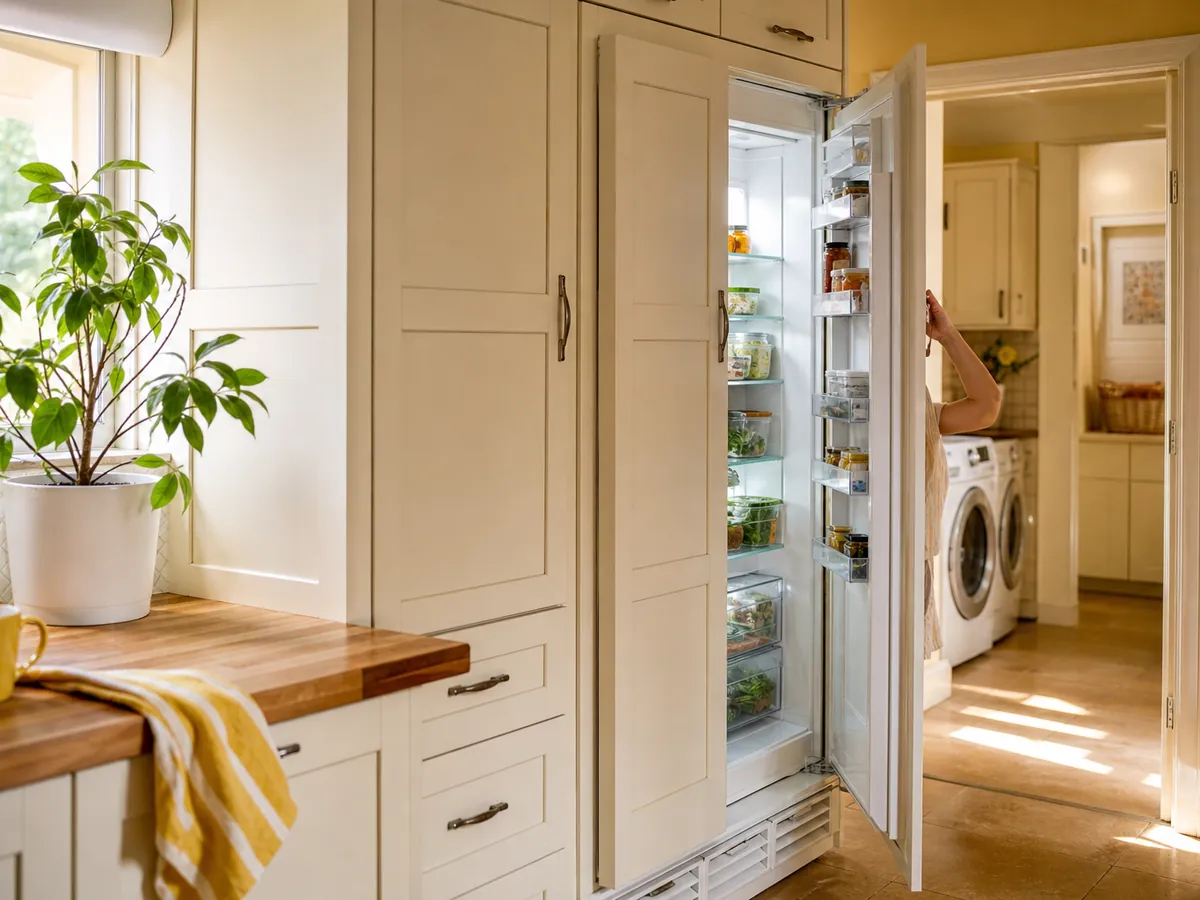
A fifteen-year-old Whirlpool side-by-side refrigerator can keep food cold with attention to the coils, the gaskets, the fans, the drain and the water system. Most failures at that age come from wear in parts that can be replaced, so a yearly check and a realistic view of repair cost give you the best chance of getting more years from it.
What wears out first in a side-by-side?
The door gaskets stiffen and tear, especially on the freezer door that opens often. The evaporator fan and the condenser fan wear out and become noisy. The defrost heater, the thermostat and the control that triggers defrost fail and let frost build on the freezer back wall. The ice maker and the water inlet valve wear, and filters clog. Hinges and door closers loosen, and a door that does not close fully lets in warm, humid air.
How do I clean the coils and the drain?
Unplug the refrigerator and vacuum the grille and the coils. Dust and cooking grease in a Florida kitchen thicken over the years, and the compressor suffers. Find the defrost drain in the back of the fresh-food section and clear it with warm water, since a clogged drain sends water onto the floor. Wipe the drain pan if you can reach it. Pull the unit out gently, and watch the water line behind it.
How do I check the gaskets and the doors?
Try the paper strip test around each door. Wipe the gaskets with warm soapy water. A gasket that is stiff or torn needs replacing, and so does one that has lost its magnetism so it no longer clings to the cabinet. Check that the doors close by themselves from a partly open position and that the unit is level, with the front slightly higher so doors swing shut. Tighten any loose hinge screws.
What about frost and noise?
A little frost on the freezer wall is normal on a frost-free model, but a thick sheet means defrost is failing. A new squeal or a rattle from the back is often a fan. A compressor that clicks and starts and stops repeatedly can have a failing start relay. Catching these early costs less than waiting until food spoils.
When is repair no longer sensible?
At fifteen years, a failed sealed system, such as a compressor leak, usually calls for a price comparison with a new refrigerator. A cracked liner, a rusted cabinet or several repairs in a year also point toward replacement. A fan, a heater, a gasket or a valve is often a sensible repair. We give a written price for the specific problem so you can decide.
What will a technician test?
We measure the temperature in both sections and then test the evaporator and condenser fans, the defrost heater and thermostat, the damper, the water inlet valve and the ice maker. We check the gaskets, the hinges and the sealed-system performance. We tell you what failed, and what is likely to fail next if we see signs. You receive a written price before work and the repair carries a 30-day workmanship warranty on labor.
Can I improve efficiency on an older unit?
Yes. Clean the coils, keep the gaskets sealing, leave air space around the cabinet and avoid keeping the unit colder than needed. Let hot food cool a little before storing it. Keep the freezer reasonably full, but not packed, so cold air moves. An older refrigerator uses more energy than a new one, and that cost belongs in your decision, but these habits reduce waste while it runs.
Do not keep a second old refrigerator running in a hot garage if it is mostly empty, since it can use a lot of power for little benefit.
Think of the refrigerator as a long-term project. Each year, record the temperature readings, the filter date and any repair. After a few years you have a picture of how it is aging, and that picture tells you more about when to replace it than any single breakdown.
| Part | Sign of wear | What you can check | When to call |
|---|---|---|---|
| Door gaskets | Gaps, frost along the edge | Paper test, clean | Tears or stiffness |
| Evaporator fan | Noise, warm fridge, cold freezer | Listen with the door open | Fan silent or loud |
| Defrost system | Thick frost on the back wall | Look inside the freezer | Frost returns after thawing |
| Water line and filter | Slow flow, leaks | Filter date, look behind | Any leak |
| Sealed system | Constant running, no cooling | Coil cleaning first | Still failing |
Frequently asked questions
Should I replace an older refrigerator just because of its age?
Not necessarily. Condition, repair history and the cost of the current problem decide it.
Will a repair cost more than it is worth?
We give a written price, and you can compare it with the cost of a new unit and delivery.
How do I keep it efficient?
Keep the coils clean, the gaskets sealing and the door closed, and give it room.
Is it safe to run an older refrigerator?
Yes, if the cord and outlet are in good shape. Replace damaged cords and avoid extension cords.