Whirlpool Water Heater Sediment: Rumbling Tanks and Flushing
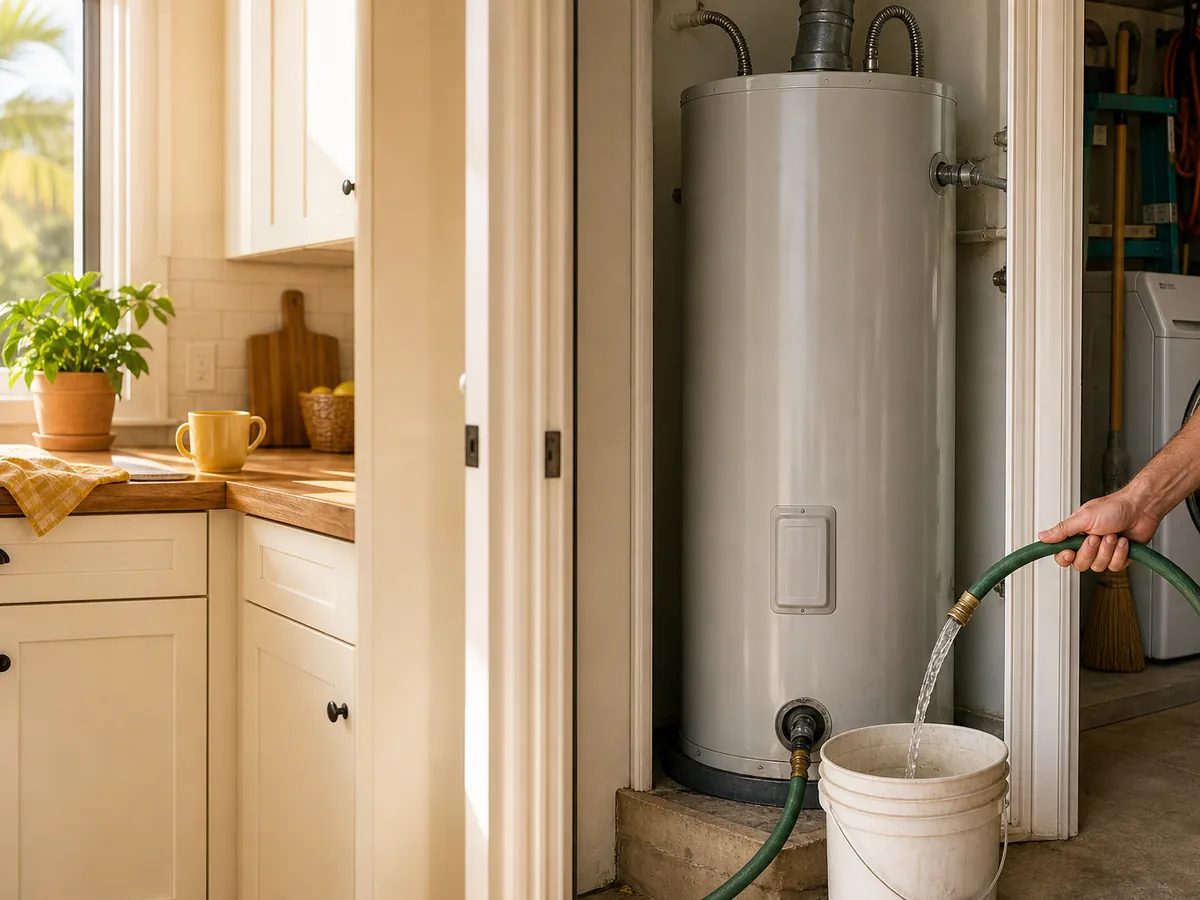
An older Whirlpool tank water heater that rumbles or pops is usually heating water trapped under a layer of sediment on the tank bottom. Flushing the tank can remove loose buildup and quiet it, but the work involves hot water, power or gas and should be done carefully, and sometimes it is better left to a technician.
Why does sediment collect in the tank?
Water carries dissolved minerals, and heating makes them come out of solution as solid scale. The solids sink to the bottom of the tank, where they pile up over the years. On a gas unit the burner heats the tank from below, so sediment sits between the flame and the water. On an electric unit it can bury the lower element. Either way, the sediment layer insulates the water from the heat and wastes energy.
Florida water varies by area and by well versus municipal supply, so the amount of sediment differs from home to home.
What causes the rumbling and popping?
Water gets trapped in the sediment and boils into steam bubbles that burst through the layer. That makes the rumble you hear when the heater runs. In heavy cases the noise is loud, and the tank may overheat at the bottom, which shortens its life. A tank that has hardened sediment also takes longer to heat and may run out of hot water faster than it used to.
How does flushing work?
The guide for your model gives the steps. In general, you turn off power or set a gas unit to its pilot or off position, close the cold water inlet, attach a hose to the drain valve and run it to a safe drain or outdoors, and open the valve to let water carry sediment out. The water is hot, so let the tank cool first and take care with the hose. Flush until the water runs clear, then close the valve, refill the tank with a hot tap open and restore power or gas.
If the drain valve is plastic, brittle or clogged with sediment, stop. A broken valve is a leak, and a technician or plumber can fit a better one.
What if flushing does not help?
Hardened scale does not wash out. Persistent noise after flushing, rust in the water, a leak or a tank that is many years old may call for a closer look. A spent anode rod accelerates corrosion, and a tank that has corroded through cannot be repaired. We can test the elements or burner and thermostats, check the relief valve and tell you what the tank condition suggests.
How often should I flush?
The guide may recommend a yearly flush, and homes with heavy sediment benefit from it. If you have never flushed an older tank, be prepared for the possibility of a leak at the drain valve afterward, and plan with a plumber nearby.
What can a technician do that I cannot?
We test the elements or the burner, the thermostats and the gas control, and we inspect the anode rod, the relief valve and the venting. We flush the tank with the right tools, and we look at what comes out, which tells us how much scale is present. If an element is coated with scale, we replace it. For a gas unit we also check the combustion air and the flue for proper draft, a safety matter that owners should never guess at.
You get a written price before any work, and the labor carries a 30-day workmanship warranty.
Why does hot water run out early?
Sediment takes up volume in the tank, so there is less room for hot water. It also insulates the heat source, so recovery is slower. A failed lower element on an electric unit has the same effect, and so does a dip tube that has broken, which sends cold water to the top of the tank. A technician can tell which one by testing, and the fix is often smaller than people fear.
If your heater is more than a decade old, think about a plan before it fails. Ask us about its condition, and consider a drain pan with a line to a safe spot, since a tank that leaks in a closet can damage floors and walls quickly. A planned replacement is easier than an emergency in the middle of a hot Florida week.
| Sign | Likely cause | What you can check | When to call |
|---|---|---|---|
| Rumble or pop when heating | Sediment layer | Flush per the guide | Noise remains |
| Hot water runs out quickly | Sediment, failed element | Check the breaker and thermostat | Short supply continues |
| Rusty hot water | Tank or anode corrosion | Compare cold water | Rust only on hot |
| Water at the base | Drain valve, fittings or tank | Dry and watch | Any leak |
Frequently asked questions
Is a rumbling heater dangerous?
Not by itself, but it signals scale that stresses the tank. Have it checked if it is loud or new.
Can I flush a gas heater myself?
Many owners do by following the guide. A smell of gas means leave the home and call the gas utility or 911 from outside.
Will a softener help?
It reduces scale formation in new tanks. It cannot undo existing hardened buildup.
How long does a tank last?
It varies with water and care. Leaks and heavy corrosion mean the end.