Whirlpool Disposer Jammed or Humming: Safe Steps, No Hands
A Whirlpool disposer that hums but does not turn is jammed. Turn off the wall switch and the breaker, never put a hand into the chamber, free the plate with a hex key from below or a wooden spoon handle from above, and press the reset button. If it jams again or leaks, the unit needs a technician.
What should I do before touching anything?
Switch off the wall switch for the disposer. Then switch off the breaker that supplies it, since a wall switch can be bumped back on. Never reach into the grind chamber, even when the power is off, because a blade or a stuck piece can still cut. Use tongs or pliers to remove anything you can see, and use a flashlight to look into the opening. Keep the area dry so that you do not touch wet electrical connections.
How do I free a jammed plate?
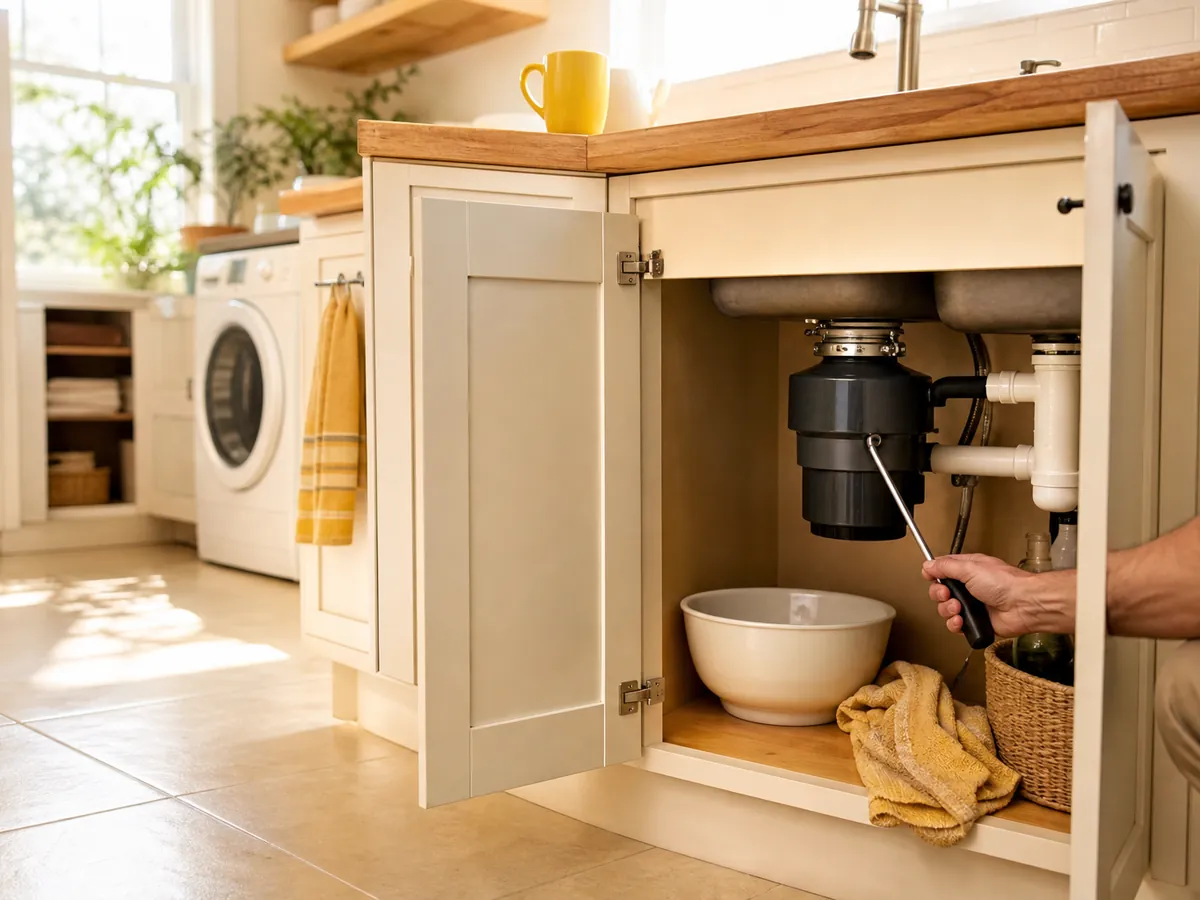
Most disposers have a socket in the center of the underside that fits a hex key. Insert the key and turn it back and forth until the plate moves freely. If your model has no socket, press a wooden spoon handle against a lug of the impeller and rotate it. Then remove the object that caused the jam, such as a bone, a fruit pit or a piece of hard plastic.
After freeing the plate, press the red reset button on the bottom of the unit. It pops out when the motor overheats or jams. Restore the breaker, run cold water and test the disposer briefly.
What if it still hums or trips again?
A disposer that jams repeatedly, hums after you free it or keeps tripping the reset has a motor or wiring problem, or a worn impeller. Do not keep resetting it. The motor can overheat. A technician can test the motor, check the connections and decide whether repair or replacement is the better path.
What about leaks and noise?
Dry the area under the sink and run water to find where it drips. A leak at the top sits at the sink flange, at the side it is probably the dishwasher or drain connection, and a leak from the bottom of the unit itself means the housing has failed. Metal rattling indicates a foreign object. Never ignore a leak, since water under a sink damages the cabinet and floor, and Florida humidity makes mold likely.
How do I prevent jams?
Run cold water during use and for a few seconds after. Cut large scraps into smaller pieces, and feed them gradually. Keep out grease, bones, corn husks, onion skins, stringy vegetables, coffee grounds in bulk and rice or pasta, which swell. Never put utensils or bottle caps in the sink without checking.
What does a technician do that I should not?
We disconnect power, remove the unit from its mount when necessary and inspect the grinding plate, the impeller and the motor shaft. We test the motor and the wiring, check the seals and the mounting ring and examine the drain and dishwasher connections. If the housing leaks, we explain why replacement is the safer path, and we reinstall with a new gasket and test it under water flow. You see the written price before we start.
If you have a septic system, tell us. It changes what goes into the disposer and how you use it.
Is the disposer the right size for my household?
A small, light-duty disposer in a busy kitchen works harder and jams more often than a larger one built for the load. The guide lists the motor size. If you cook for many people or rinse a lot of scraps, a stronger motor may be a better fit when you replace the unit. We can discuss options when we see how it is installed, and we will say plainly when the existing model is fine for your use.
Florida kitchens also benefit from a regular rinse to keep odors down, since scraps spoil quickly in warm drains.
Keep a note of what was in the disposer when it jammed. A bone, a fruit pit, a utensil or fibrous scraps each suggest a different habit to change, and the note helps you avoid a repeat.
| Sign | Likely cause | What you can check | When to call |
|---|---|---|---|
| Hum, no turning | Jammed plate | Hex key or spoon handle, power off | Jams repeatedly |
| Silent, no hum | Reset tripped or no power | Press reset, check switch | Reset does not hold |
| Leak at the sink flange | Worn gasket or mounting | Look from above and below | Leak continues |
| Leak from the body | Cracked housing | Dry and watch | Replace the unit |
Frequently asked questions
Can I use ice to sharpen the blades?
Ice can help clean the chamber, but a disposer has no blades to sharpen. Follow the guide for cleaning.
Is a humming disposer dangerous?
It can overheat. Turn it off and clear the jam, and call for help if it continues.
Should I use drain cleaner?
Strong chemicals can harm seals and cause hazardous splashes. Clear mechanical jams first.
Do disposers wear out?
Yes. A seized motor or a leaking body means replacement.