Whirlpool Microwave Humming Loudly, Buzzing or Tripping Breaker
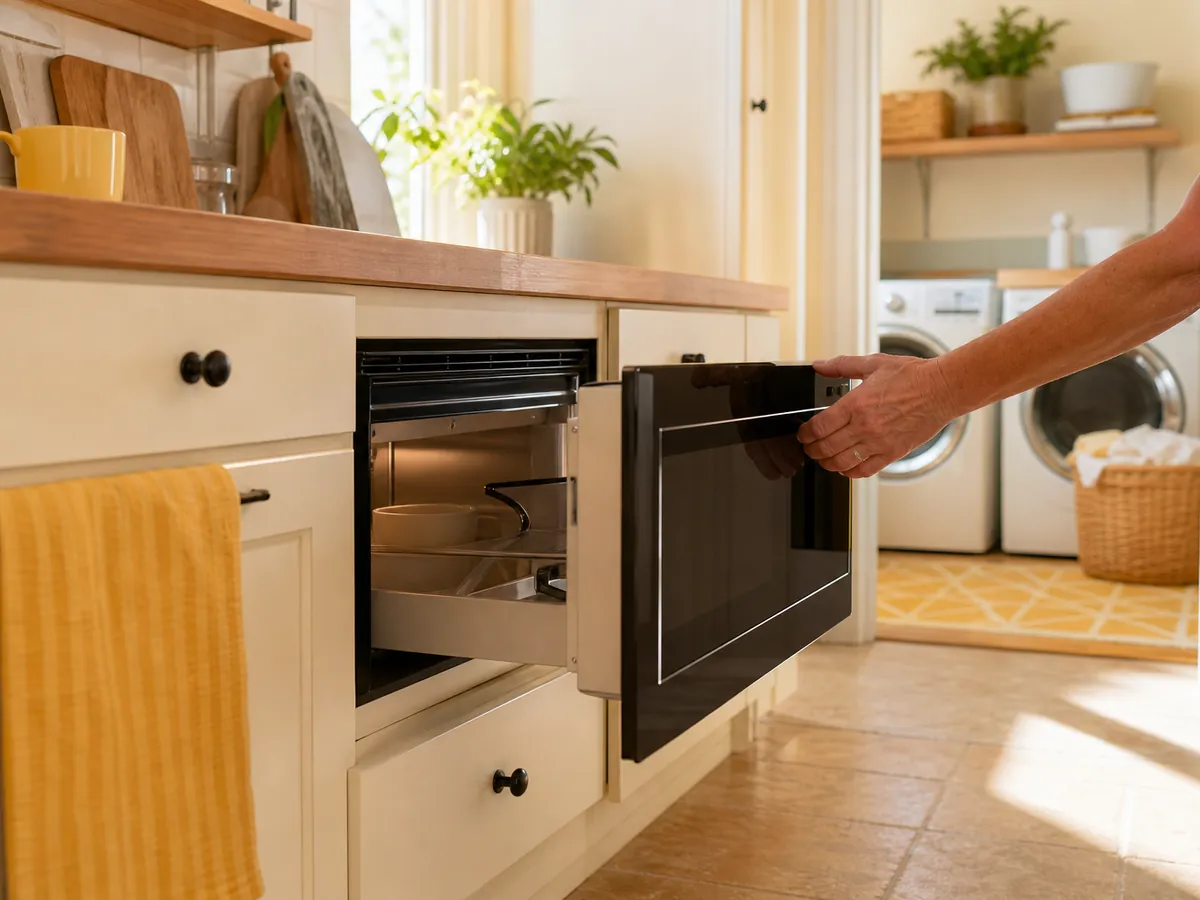
A Whirlpool microwave that hums loudly, buzzes or trips the breaker has a worn motor or a failing high-voltage part. Some humming is normal when it heats, but a new loud noise, a burning smell or a breaker that trips every time is a reason to stop using it and have it checked.
What is normal and what is not?
A microwave makes a steady hum while it heats, and the cooling fan whirs. The turntable motor adds a low rumble. These sounds change little from use to use. A louder buzz than before, a grinding or clicking, a sound that starts and stops or a hum with no heat means something is wearing. A burning smell or a visible spark inside is a stop sign.
Listen to it with a cup of water inside, never empty. Running a microwave empty can damage it.
Which parts make noise when they wear?
The turntable motor and its roller ring can grind when food residue builds under the glass tray. The cooling fan can rub on the housing or pick up grease. The stirrer motor, hidden in the cavity ceiling on some models, can fail. The high-voltage transformer can hum louder as it wears, and a failing capacitor or diode can create a buzz. Those last parts store a dangerous charge, so only a technician should handle them.
Why does the breaker trip?
If the breaker trips as soon as the microwave starts, something inside draws more current than the circuit allows. That could be a shorted transformer, a failing diode or a damaged cord. It can also be a circuit overloaded with other appliances, so make sure nothing else large is plugged into the same circuit. Do not keep resetting the breaker, because that stresses the wiring.
What can I safely do myself?
Unplug the microwave. Remove the glass tray and the roller ring, wash them and clean under them. Wipe the cavity and the door seal. Check that the outlet and plug are not warm or discolored. Put everything back and test with a cup of water. If the noise remains, do not remove the outer cover. The inside holds high-voltage parts even when it is unplugged.
What should I know about venting and over-the-range models?
An over-the-range microwave also acts as a hood, with a fan, a light and a charcoal or grease filter. Grease from the cooktop below coats the fan and the filter. A fan that is clogged can sound louder or whine, and it may be part of the noise you hear. Clean the grease filter, and replace the charcoal filter on the schedule in the guide. If the fan sounds like it is dragging, a technician can check the motor.
The unit hangs from a bracket, so tell us if it has loosened or vibrates against the cabinet.
How do I protect the microwave in a Florida home?
Storms and surges are a particular risk. Plug the microwave into a grounded outlet and consider a surge protector if it is a countertop unit, and unplug it before a direct storm if you can do so safely. Humidity and salt air can also corrode contacts. A microwave that has been closed up in a seasonal home may hum when first used, so run it with a cup of water for a short time to see if the noise settles. If it does not, stop and call us.
Before you call, write down when the noise happens: at start, during heating, while the turntable moves or after the cycle ends. Mention whether it is a hum, a buzz or a scrape, and whether the display or light changes when it starts. If the breaker trips, note which breaker, and whether the microwave was the only large load running. That information shortens the diagnosis, and we can tell you whether a repair is worth the cost for your model before any work.
Keep the area around the microwave clear as well. Vents on the sides, top or back need space, and a unit wedged tight in a cabinet runs hotter and louder than one with the clearance the guide asks for. Heat is hard on the fan and the transformer.
| Sign | Likely cause | What you can check | When to call |
|---|---|---|---|
| Rumble or grinding from the floor | Dirty roller ring or tray | Wash and reseat tray | Noise stays |
| Loud buzz while heating | Transformer or capacitor wearing | Nothing, avoid use | Soon |
| Breaker trips at start | Shorted part or overloaded circuit | Check what else shares the circuit | Trips again |
| Fan whine with no heating | Fan or heating parts | Listen with a cup of water inside | No heating at all |
Frequently asked questions
Is a humming microwave dangerous?
Not by itself, but a change in noise can precede a part failure. Stop using it if you notice smoke, sparks or a burning smell.
Should I replace it or repair it?
Over-the-range models cost more to replace because of mounting and venting. We give a written price for the repair so you can compare.
Why does my microwave buzz when idle?
A buzz when idle could be the control board or a relay. A technician can find it.
Can a surge cause this?
Surges can damage the board and high-voltage parts. If it began after a storm, tell us.