Whirlpool Dryer Takes Too Long: Lint Screen, Vent, Load Size
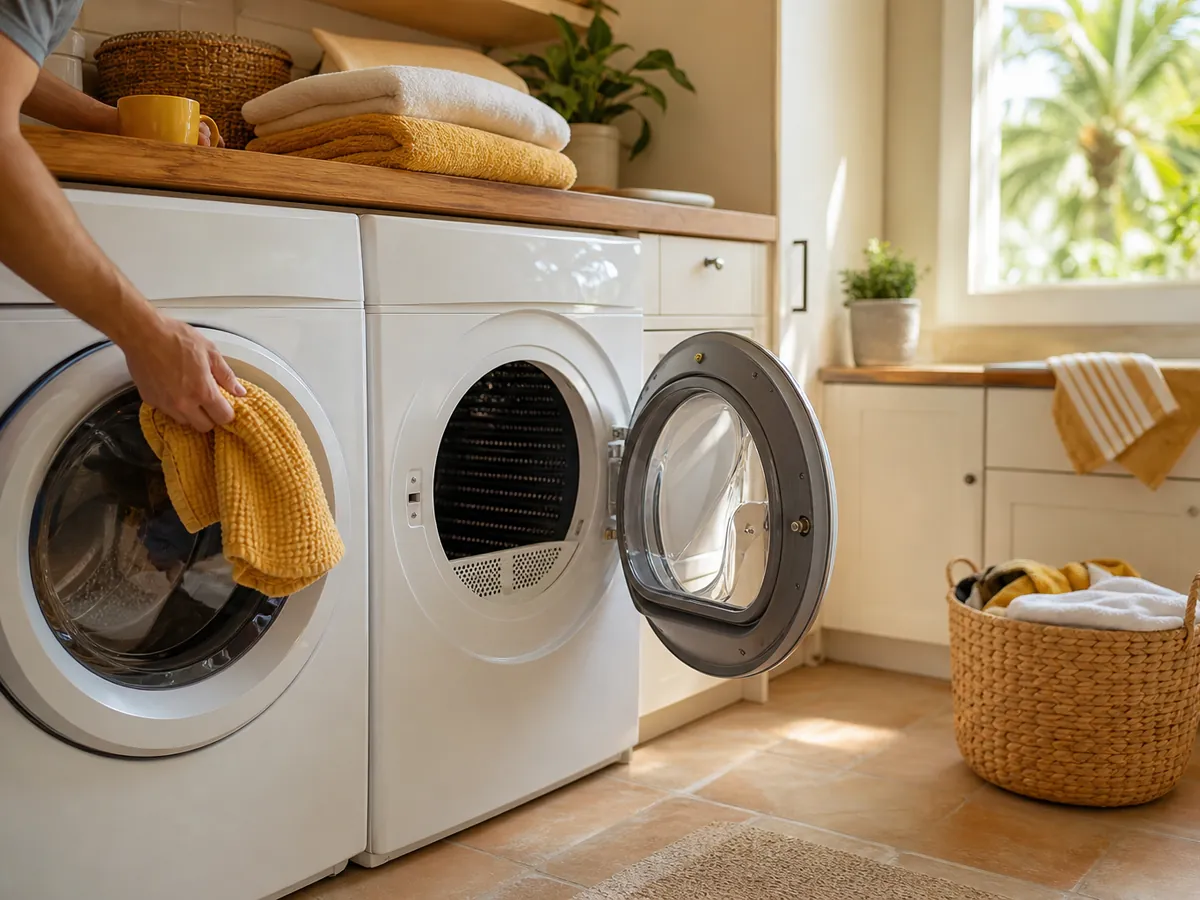
When a Whirlpool dryer takes two cycles to dry a normal load, the lint screen, the vent run and the load size explain most cases. Clean the screen, check the outside cap for airflow and dry smaller loads before you spend money on parts, then call if the dryer is still slow.
Is the lint screen really clean?
The screen can look clean while a thin film from fabric softener sheets blocks the mesh. Hold it up to the light. If you cannot see through it evenly, wash it with warm water and a soft brush, dry it and put it back. Check the lint trap housing too, since lint falls into the opening below the screen and builds up where you cannot see. A vacuum with a long attachment cleans it out.
Do this with the dryer unplugged. Lint is fuel, so a clean path matters for safety as well as speed.
How do I test the vent quickly?
Run the dryer on air or low heat and go outside to the vent cap. A strong, steady stream of air is a good sign. A weak puff, a flap that barely lifts or no air at all points to a restriction. Then look at the duct behind the dryer for crushing or kinks. Pulling the dryer forward reveals problems quickly. Long runs, many bends and flexible foil duct all slow the air.
Does load size change drying time?
Yes. A drum packed tight does not let air pass through the clothes, and a single heavy item such as a comforter wraps into a ball. Dry large items alone, and shake out clothes before loading. Mix in a dry towel with a small, wet load to help tumbling. Make sure the washer spins well, since wetter clothes take more time and more energy to dry.
Moisture-sensing cycles stop when the sensor strip detects dryness. Wipe the sensor bars in the drum with a damp cloth, since fabric softener film can mislead them.
When does the heat itself fail?
A weak electric element, a gas burner that does not stay lit or a thermostat that cuts out early reduces heat. In that case the vent may be fine, yet the clothes stay damp and the air is only warm. A technician measures the temperature and the airflow and tells you which one is off, with a price in writing before any repair.
What can a technician measure that I cannot?
We measure the air coming out of the vent, the temperature inside the dryer and the current drawn by the heating element or the gas flame. These numbers tell us whether the dryer makes heat, moves air or both. Many slow dryers turn out to have a good heating system and a bad vent, which is a lower-cost fix than a part. Where heat is truly low, we replace the failing part and recheck the numbers.
You receive a written price before work begins, and nothing is replaced without your approval.
Does the type of dryer matter?
Gas dryers need airflow for the burner to stay lit, so a restricted vent can make a gas dryer shut the flame off early. Electric dryers use a heating element and a thermostat, so a weak element or a stuck thermostat shows up as lukewarm air. Models with moisture sensing and steam options add sensor bars and valves that can also drift. We test the parts that apply to your model.
If you want a simple benchmark, dry a load of bath towels with the same settings every week for a month and write down the time they take. A steady figure means the dryer is consistent. A figure that creeps up means lint is building in the vent or the heat is fading, and you know to act before the dryer begins to shut off or overheat.
That kind of record costs nothing and helps us find the cause quickly when you do call.
| Sign | Likely cause | What you can check | When to call |
|---|---|---|---|
| Hot but damp clothes | Restricted vent | Cap airflow and duct | Run is long or hidden |
| Warm but not hot | Weak element or burner | Compare with a normal load | Still weak after the vent check |
| Sensor cycle ends early or late | Dirty moisture bars | Wipe the bars | Does not improve |
| Only large loads are slow | Load size | Dry smaller loads | Not applicable |
Keeping a short log of the cycle times for a normal load of towels gives you a baseline, and any change shows up in numbers rather than impressions.
Frequently asked questions
Do dryer sheets harm the dryer?
They can leave film on the screen and sensors. Wash the screen regularly if you use them.
Why do jeans stay damp in the seams?
Thick seams hold moisture. Use a longer cycle or a lower load, and keep the vent clear.
Is a long vent run a problem?
It can be. Check the maximum length in your installation guide.
Could my washer be the cause?
Yes, if its spin is weak and clothes arrive soaked.