Whirlpool Water Filtration: Slow Flow, Filter Changes, What Is Normal
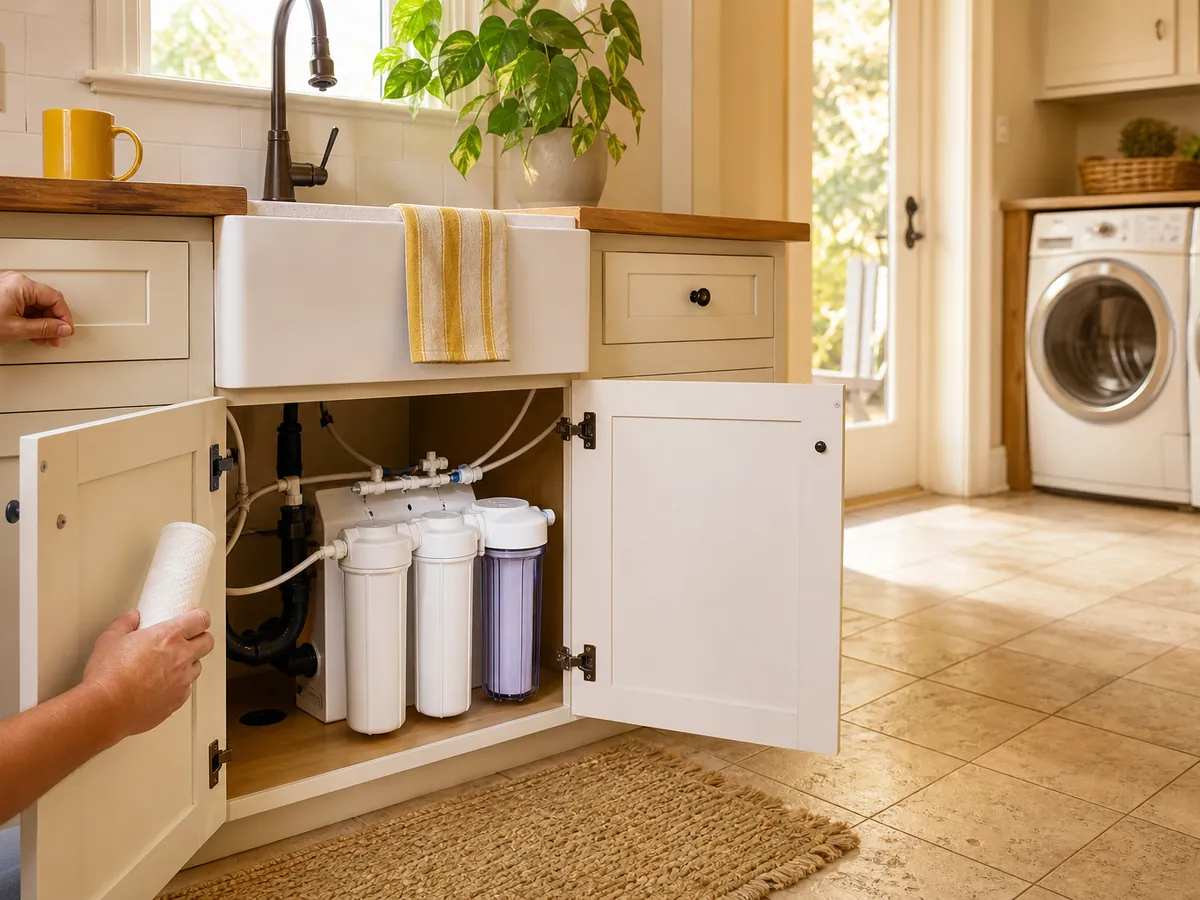
Slow flow from a Whirlpool water filtration system usually means a cartridge that is due for replacement, but a closed valve, trapped air or a clogged housing can look the same. Check the change date first, then the valves and the housing, and ask for service if flow stays low with a new cartridge.
What is normal for a filter system?
A new cartridge may spit air and run cloudy for a short time while it fills. Water pressure at the filter faucet is a little lower than at a regular tap because water passes through fine media. Carbon filters remove some taste and odor, and some may change the way water tastes after a change. Over the months, flow gradually decreases as the filter loads with particles. That slow decline is normal and is the reason for the change interval in your guide.
How do I know when to change the cartridge?
Follow the interval in the guide and any indicator light or reminder on the system. Change it earlier if flow drops noticeably, the water tastes or smells different or the housing feels warm and slimy. Heavy sediment, as in some well water or after construction or a storm, can clog a cartridge faster. Write the date on the housing or on a label so you do not rely on memory.
Always use the cartridge listed for your model. A similar-looking cartridge that does not seal can let unfiltered water pass.
How do I change a cartridge safely?
Close the supply valve to the system, and relieve pressure by opening the filter faucet. Place a bucket under the housing. Unscrew the housing with the wrench supplied, empty the water, remove the old cartridge and wipe the housing. Fit the new cartridge, check the O-ring, tighten the housing by hand plus a small turn and open the supply slowly. Run water through the filter faucet until it clears, and look for drips for the next day.
What if flow is slow with a new cartridge?
Check that the inlet and outlet valves are fully open and that the bypass is not partly closed. Trapped air after a change can slow flow, so run the faucet for a few minutes. A kinked tube or a clogged faucet screen can be the cause. If the problem remains, the housing, a pressure regulator or the household supply may be involved, and a technician can measure flow and pressure to see.
How do storms and wells affect filtration?
After heavy rain or flooding, wells can carry more sediment, and municipal systems may issue notices. Filters do not make unsafe water safe unless they are designed for that purpose, so follow local advice on boil notices and testing. Your health department or utility can tell you how to test a private well.
What will a technician check?
We check the inlet and outlet pressure, the valves, the housing and its seals, the lines and the faucet. For a softener we test the control valve and the brine system. We tell you whether the problem is the cartridge, the housing or something in the home plumbing, and we quote in writing before replacing anything. Our labor carries a 30-day workmanship warranty.
What should I record about my water?
Note the source, such as city water or a private well, the date of any test and what the report said. Keep the filter model and the change dates. If you notice cloudy water, a smell or a change after rain, write down when. That record helps us choose the right filter and set a sensible schedule.
Private well owners should test the water on a regular basis through a qualified lab, because a household filter is not a substitute for testing.
Make a habit of changing the cartridge at the same time every year, perhaps when you change the batteries in your smoke alarms, and add a second reminder if your household uses a lot of water. A regular rhythm prevents the slow decline in flow that most owners do not notice until it is serious.
Keep a spare cartridge on hand if you are in a rural area or a second home, so a missed change does not leave you without filtration.
| Sign | Likely cause | What you can check | When to call |
|---|---|---|---|
| Gradual loss of flow | Cartridge loading | Change date, replace if due | New cartridge, still slow |
| Sudden flow loss | Closed valve or kinked line | Valves and tubing | Valves open, no flow |
| Leak at the housing | Seated O-ring or cracked housing | Reseat the O-ring, dry | Leak returns |
| Taste or odor returns | Spent carbon | Change the cartridge | Persists after change |
Frequently asked questions
Do filters need flushing?
Yes. Run water through a new cartridge as the guide says to clear air and fine carbon.
Can I leave a cartridge in too long?
An overused cartridge loses effect and may release what it trapped, so follow the interval.
Does a filter soften water?
Most filters do not. A softener uses resin and salt for that purpose.
What about a second home?
Close the supply before a long absence, and change the cartridge on return.