Whirlpool Wine Cooler Not Cooling in a Warm Florida Room
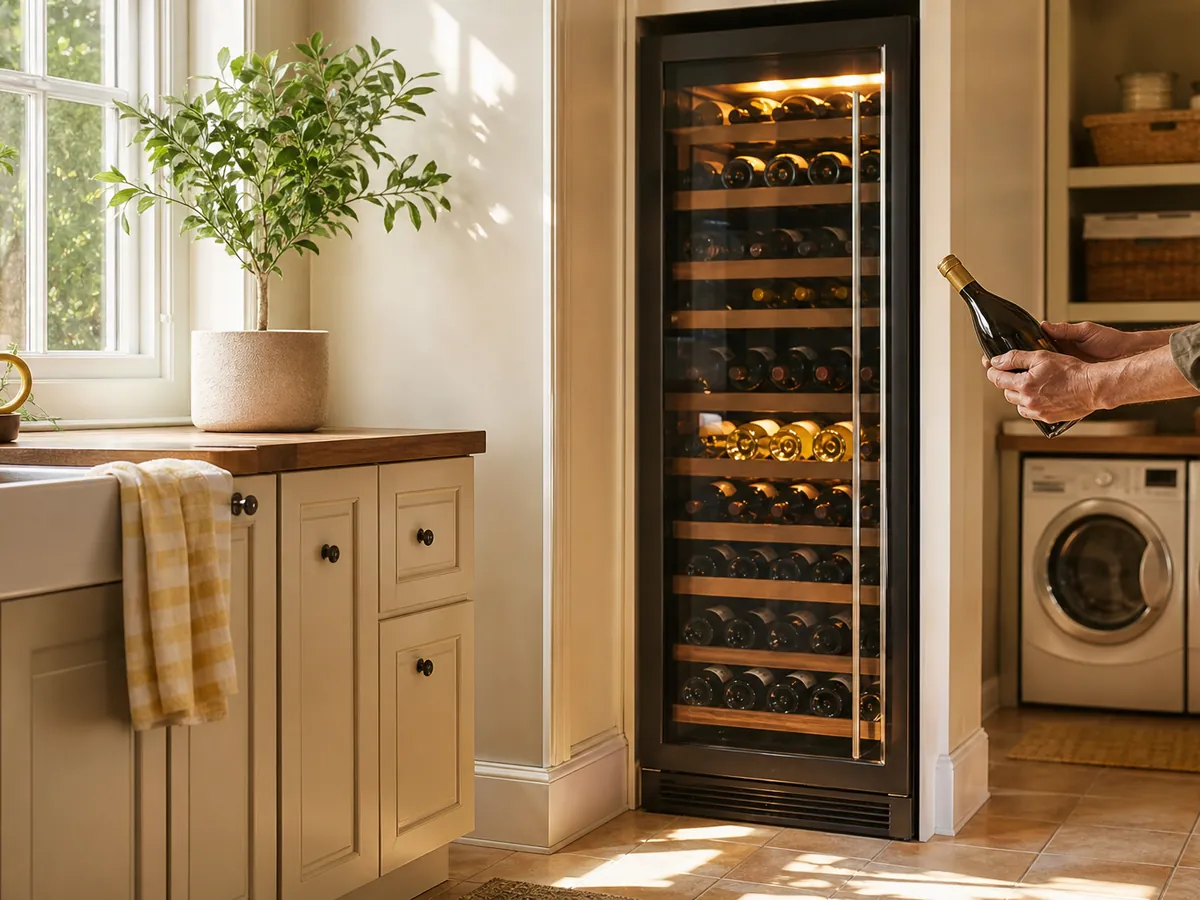
A Whirlpool wine cooler that is not cooling in a warm Florida room usually has blocked vents, poor placement, dirty coils or a room that is hotter than the unit was designed for. Check the clearance, the coils and the room temperature first, then ask for service if the cabinet still stays warm.
Is the room too warm for the cooler?
Every wine cooler has an ambient temperature range in the guide. A sunroom, a garage or a lanai may exceed it, and a unit placed next to an oven or a sunny window absorbs heat. When room air is hot, the compressor runs longer and may never reach the set temperature. Check the room with a thermometer at the cooler during the afternoon. If it is above the range, move the cooler, shade the area or cool the room.
Are the vents and clearance adequate?
Freestanding coolers need space on the sides and back, and built-in models vent through the front grille. A cooler wedged into a closed cabinet without ventilation holds its own heat. Move boxes, clear the grille and give the unit the clearance the guide lists. A built-in unit installed in a freestanding location also overheats, so match the model to the installation.
Unplug the unit before you touch the grille. Vacuum dust from the grille and the coils with a soft brush. Florida’s humid air makes dust cling.
Is the thermostat set and reading correctly?
Check that the control is set where you want it and that the display shows a temperature that matches a separate thermometer placed among the bottles. A big difference between them points to a sensor problem. Wait a day after any change, since a full cabinet takes time to settle. A cabinet that was just filled with warm bottles will take many hours to recover.
What if it still will not cool?
A weak fan, a failing compressor, a leaking door seal or a sealed-system problem may be the cause. Close the door on a strip of paper to test the seal. Listen for the fans and the compressor. If the compressor never starts or runs without cooling, a technician has to test the start parts and the sealed system, which an EPA-qualified technician handles.
How about wine storage during the repair?
Move valuable bottles to a cool, dark place during the repair if the cabinet is warm. Short periods of heat are less harmful than long ones, but repeated swings damage wine. Avoid keeping bottles in a hot garage while the cooler is out of service.
What will a technician check?
We measure the temperature inside the cabinet at several shelves and compare it with the display. We test the fans, the compressor and its start parts, the thermostat and the sensors, and the door seal. We look at the condenser coils, the vents and the surrounding space. If the problem is the room rather than the machine, we say so and suggest changes. You receive a written price before work and a 30-day workmanship warranty on labor.
Can I improve the placement?
Often yes. Move the cooler out of direct sun and away from heat sources such as ovens and dishwashers. Leave clearance on the sides and back as the guide says. Place it on a solid floor in a level position. If it is built in, make sure the front vent is clear and not covered by a decorative panel. In a hot space, a small fan that moves air through the room can help, or air conditioning that runs during the day.
If you cannot change the room, choose a model rated for the conditions next time.
Seasonal owners deserve a special note. If you close your home for the summer, the cooler may be the only appliance working in a hot, shut house. Ask whether to leave it running, set a conservative temperature and arrange for someone to check it. Moving bottles to a cooler place may be the safer choice for a long absence.
If bottles go in at room temperature, load only a few at a time so the cabinet is not overwhelmed. Label the shelf you use for bottles you plan to open soon, and keep valuable bottles on the shelves with the steadiest temperature.
| Sign | Likely cause | What you can check | When to call |
|---|---|---|---|
| Warm cabinet, compressor running | Hot room or dirty coils | Room temperature, vacuum the grille | Still warm after cleaning |
| One shelf is warm | Fan or crowded bottles | Listen for the fan, thin the load | Fan is silent |
| Door fogs or drips | Humid air or loose gasket | Wipe the gasket, test it | Gasket is torn |
| No sound at all | Power or control | Outlet and breaker | Power is fine |
Frequently asked questions
What temperature range works for wine?
Follow the guide and the producer’s advice. Steady temperature matters more than hitting an exact number.
Can I put a cooler on a covered patio?
Only if it is rated for it. Most are made for indoor use.
Why is the display blinking?
It can signal a high temperature, an open door or a sensor error. Check the guide.
Is it worth repairing?
Fans, sensors and seals are modest repairs. A failed compressor needs a price comparison.