Whirlpool Room Air Conditioner Dripping Indoors: Tilt, Drain, Seal
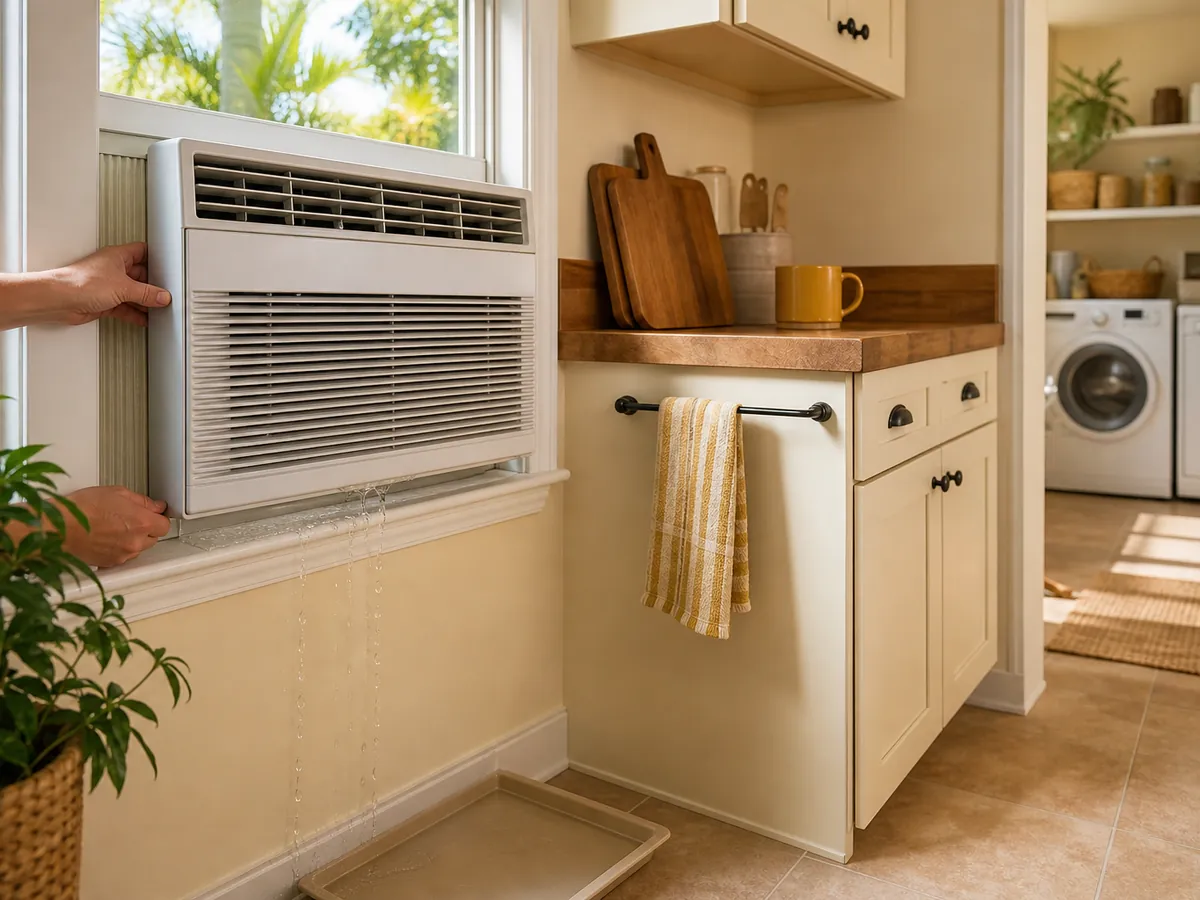
A Whirlpool room air conditioner that drips into the house usually leans the wrong way, has a clogged drain path or sits in a window with gaps that let in humid air. Check the tilt, the filter and the seal, and make sure the water has a way out, before you assume the unit has failed.
Is the unit tilted correctly?
A room air conditioner collects condensate in a pan at the base, and the design expects it to leave the cabinet toward the outside. Most guides call for a slight downward tilt toward the outside. If it leans inward, water runs into the room. Check it with a small level, and look at the support bracket and the window sill. A sagging sill or a loose bracket can change the angle over a season.
Do not prop the unit with random objects. Use the support the guide describes, and ask for help with lifting, since these units are heavy and awkward.
Could the drain be blocked?
Dust, algae and insects can block the drain hole or the pan, so water overflows. Unplug the unit and look at the base from the outside. Clear the drain gently with a soft wire or a pipe cleaner. Clean the filter at the same time, since a clogged filter makes the coil colder, and a very cold coil produces more water. Wipe the pan if you can reach it.
In humid Florida air, the unit produces a lot of condensate, so the drain needs to be clear all summer.
What about the window seal?
Gaps around the cabinet let warm, damp air flow in and condense on cold surfaces. Check the accordion panels and foam seals. Replace brittle foam and close gaps with the weatherstripping the manufacturer allows. A damp stain on the sill or the wall under the unit tells you where moisture collects. Water that drips from the front grille during heavy humidity can be normal in small amounts, but a stream is not.
Does a frozen coil cause dripping?
Yes. When airflow is blocked or the room is cool, ice forms on the coil, and as it melts the pan overflows. Turn the unit to fan only until the ice melts, then clean the filter and the coil. If ice returns, the refrigerant charge or the fan may be the cause, and an EPA-qualified technician has to handle the sealed system.
How do heat and humidity change the problem?
A Florida room air conditioner removes large amounts of water from humid air, so a small drain restriction shows up fast. In summer the unit may produce water continuously for hours, and the pan has little reserve. Closing doors and windows helps, because the unit then conditions the same air rather than fighting outdoor humidity all day. Salt air also corrodes the rear coil near the coast, so check it for green or white crust.
If the unit is in a lanai room or a converted garage, leaks and gaps in the building shell will also add moisture.
What will a technician check?
We check the tilt, the drain path, the fan, the coil and the seals. We measure the temperature drop between the air entering and leaving the unit, and we look for a refrigerant leak if the coil freezes. We provide a written price before work begins, and refrigerant work follows EPA rules. If the unit is near the end of its life, we tell you plainly and let you compare repair with replacement.
If the unit is installed in a casement window or through a wall sleeve, the drainage details differ from a double-hung window, and the guide describes each case. A sleeve that has rusted or collects water can leak into the wall. Look at the sleeve and the outside of the wall for staining. If the unit is installed permanently, a weathered sleeve is a good reason to ask for a closer inspection of the whole installation, not just the machine.
Take a photo of the nameplate and the installation before you call, since it shows us the model, the mounting and the window type at a glance.
| Sign | Likely cause | What you can check | When to call |
|---|---|---|---|
| Water runs inside along the cabinet | Tilted inward | Level and bracket | Window frame is damaged |
| Drip at the front when humid | Blocked drain or full pan | Clear drain, clean filter | Still dripping |
| Damp wall or sill | Leaky seal | Foam and panels | Gaps you cannot fix |
| Ice then a flood | Frozen coil | Fan only, clean filter | Ice returns |
If water has reached the wall or the floor, dry it quickly to prevent mold, which grows fast in warm, damp rooms.
Frequently asked questions
Is some dripping normal?
A little outdoor drip is normal. Indoor drips are not, and they need attention.
Can I add a drain hose?
Some models allow it. Check the guide, since the wrong setup can flood the unit.
How often should I clean the filter?
Every few weeks in the cooling season, and more with pets or dust.
Will a repair be worth it?
Small fixes usually are. For a sealed-system failure, compare the price to a new unit.