Whirlpool Front-Load Washer and Dryer at Twelve Years: Care
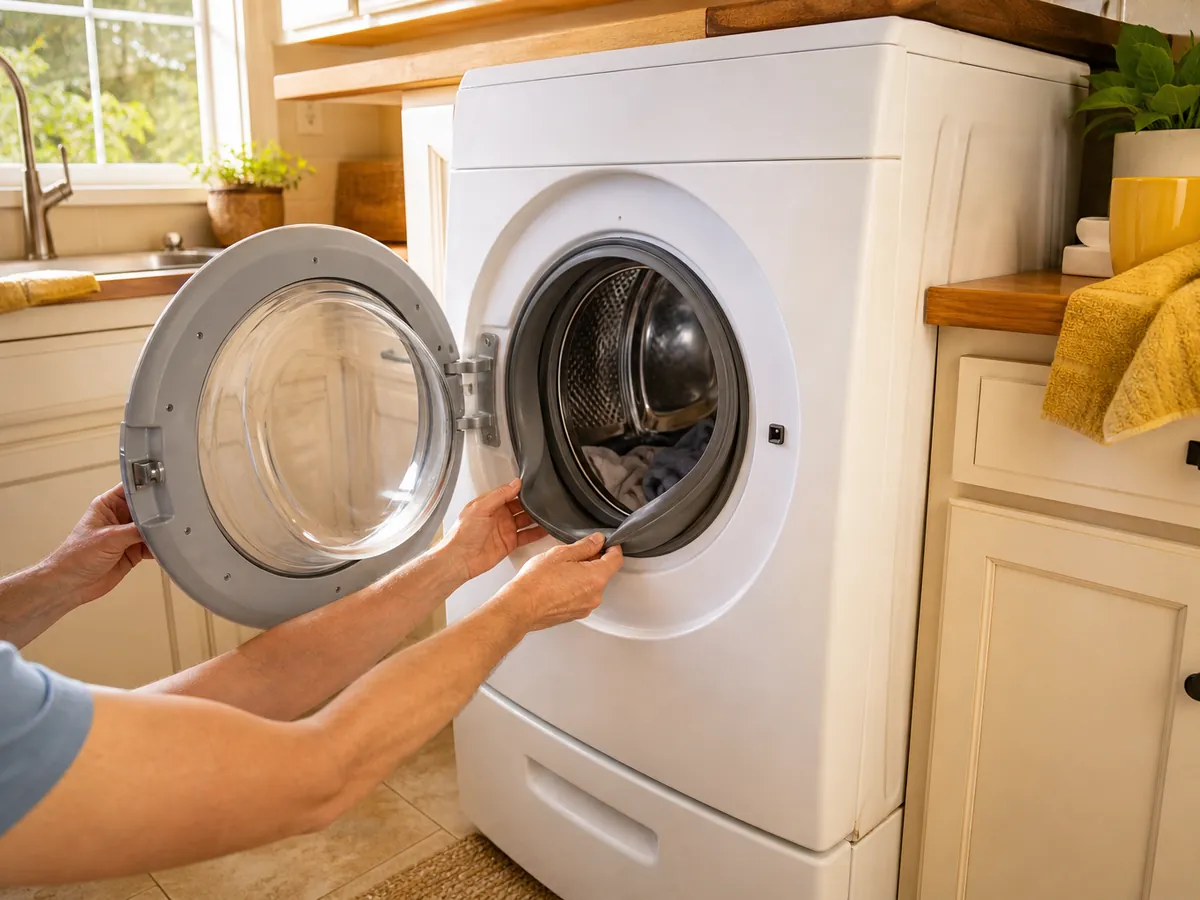
A Whirlpool front-load washer and dryer at twelve years old are worth a careful look at the door seal, the drum bearings, the pedestals or stand, the hoses and the dryer vent. Many pairs keep working well at that age, but these are the places where wear collects, and a short inspection tells you whether to keep investing or start planning.
What should I look at on the washer first?
Unplug it and close the water valves. Pull back the rubber door boot and look in the folds for mold, tears and trapped debris. Run your hand around the drum and rock it gently. A drum that moves with a clunk, or sounds rough when it spins, may have worn bearings. A rumble that grows worse at high spin and a burning rubber smell are also warning signs. Look underneath for rust stains, which show a slow leak.
Check the drain pump filter behind the lower front panel if your model has one, with a shallow pan under it to catch water.
How do pedestals and stands affect the pair?
A pedestal lifts the machine and holds a drawer, but it also raises the center of gravity. A washer on a pedestal vibrates more if the feet are not locked and level. Check that the washer is secured to the pedestal as the guide requires, that the feet sit firmly on the floor and that the whole stack does not rock. In a stacked pair, the dryer rests on a kit, so check its fasteners too. Never lean on or climb onto a washer or dryer.
What about the dryer at this age?
Clean the lint screen after every load and wash it once in a while with warm water. Then look at the vent. Pull the dryer away from the wall, check the duct for crushing and lint, and look at the outside cap. Heating elements, thermal fuses, belts and rollers wear. A dryer that takes longer to dry, shuts off early or squeals should be checked before it becomes a fire risk.
When does it make sense to replace instead of repair?
Twelve years is not too old for a repair when the problem is a hose, a belt, a pump or a door seal. Expensive failures, such as a drum bearing or a main board on the washer, deserve a price comparison. We give a written quote for repair, and you can set it against a new pair and the costs of delivery, hookup and a new vent.
How does humidity treat a front-load pair?
Front-loaders are more sensitive to moisture because the door boot holds water. In a Florida laundry room, a washer used daily may still grow mildew if the door stays shut. Wipe the boot, leave the door ajar and use the cleaning cycle regularly. The dryer, in contrast, benefits from a dry room, so keep the area ventilated and the vent clear, because a damp laundry room slows drying and fogs the windows.
Salt air near the coast also rusts exposed metal such as pedestal fasteners and hose fittings, so look for corrosion every year.
What will a technician test on the pair?
On the washer, we measure drum play, test the drain pump, the door lock and the inlet valves and check the suspension. On the dryer, we test the element or the burner, the thermostats, the belt, the rollers and the airflow. We write down what we found and give you a price for each repair, so you can decide which parts are worth fixing on a twelve-year-old machine. Our labor carries a 30-day workmanship warranty.
It also helps to treat the pair as a system. A washer that spins well sends drier clothes to the dryer, which shortens drying time and lowers heat on the dryer’s parts. A dryer with a clear vent keeps the laundry room dry, which helps the washer’s door boot stay cleaner. Small habits in one machine pay off in the other, and an inspection that looks at both gives you a more honest picture of what the pair has left.
Keep notes of any repairs and their dates, since a history of repairs helps decide when replacement is the better path.
| Part | What to look for | What you can check | When to call |
|---|---|---|---|
| Door boot and seal | Tears, mold, stiffness | Fold back and look | Tear or constant leak |
| Drum bearings | Rumble, grind, rust stains | Rock the drum, listen | Noise at spin |
| Pedestal and feet | Rocking, walking | Level and tighten | Frame is bent |
| Dryer vent and lint path | Long drying times | Clean screen, inspect duct | Overheating or burning smell |
Keep the manuals handy and note the model and serial numbers somewhere you can find them quickly.
Frequently asked questions
How can I tell if a bearing is going?
Rumbling or grinding while the drum spins, especially at high speed, is the usual sign. A technician can confirm it.
Can the washer sit directly on the floor instead of a pedestal?
Yes, if it is level and the feet are firm. Follow the guide.
Why do front-loaders smell?
Moisture trapped in the door boot and detergent residue. Leave the door ajar and wipe the boot.
How often should the dryer vent be cleaned?
At least once a year, and more often when drying times grow.