Whirlpool Range Oven Temperature Drifting: Sensor and Gasket
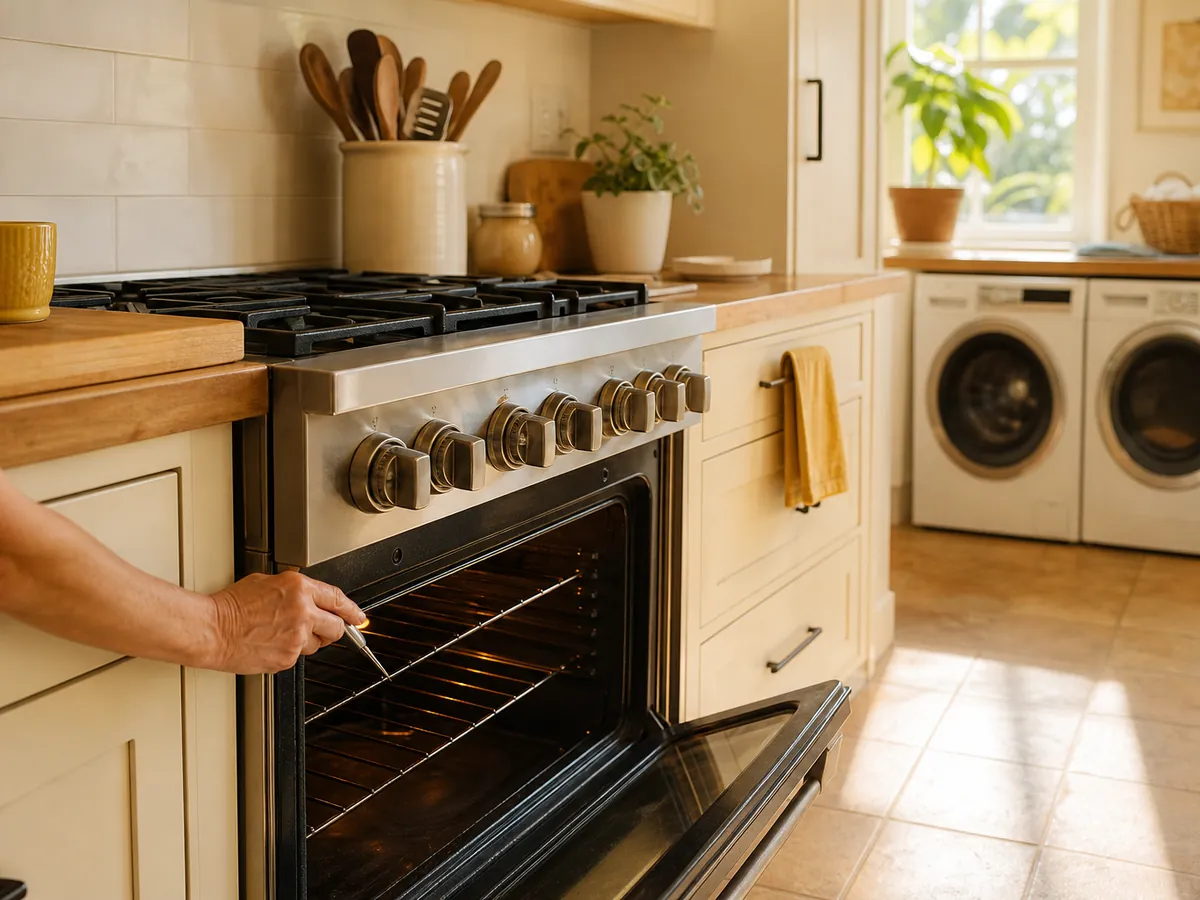
An older Whirlpool range oven that bakes too hot or too cool usually has a drifting temperature sensor, a worn door gasket or a control that needs calibration. An oven thermometer on the middle rack shows the real temperature, and the pattern of error tells you which of the three to look at.
How do I measure what the oven really does?
Buy a basic oven thermometer, hang it on the middle rack and set the oven to 350 degrees F. Wait for the preheat signal and then another fifteen minutes. Read the thermometer through the glass without opening the door more than once. Repeat at a second temperature, because some ovens are off at one setting and fine at another. Write down the set value and the measured value.
An oven that cycles up and down a little around the setting is normal. A steady offset, always hotter or always cooler, is the sign worth acting on.
Can I calibrate the oven myself?
Many Whirlpool ranges let you adjust the oven temperature offset through the control, and the use-and-care guide shows the steps for your model. A small offset can correct a steady error. It cannot fix a sensor that jumps around or an element that has failed. If the control menu has no offset option, or the adjustment does not hold, the sensor or the control needs service.
What does the oven sensor do?
A thin probe inside the oven reads the temperature and tells the control when to turn the element on and off. As the probe ages, its resistance drifts, so the control reads a temperature that is not real. A technician can measure the probe with a meter and compare it with the expected value. Damaged probes should be replaced. Never bend or move the probe to try to fix the reading.
Does the door gasket matter?
The gasket keeps heat in the cavity. When it flattens, tears or comes loose, heat escapes around the door, the oven works harder, and food at the front bakes less evenly. Look for gaps, brittle spots and a door that does not sit square. Some ranges have a gasket that runs only partway around the door, so check the guide.
Let the oven cool completely and switch off the breaker before touching any part of the door or the gasket.
How does an old oven behave differently from a new one?
An older oven often takes longer to preheat, cycles more widely around the setting and may heat unevenly from front to back. Elements age and their output drops, sensors drift and the control board’s readings shift. None of that means the oven is unsafe, but it does change how recipes turn out. Some owners compensate by setting the dial higher or lower. That works for one temperature and fails at another, so measure at the temperatures you actually use.
Rack position matters too. Baking on the lowest rack puts food closer to the bake element, and the top rack sits near the broiler. Use the middle for even results.
What will a technician test?
We check the sensor resistance, the bake and broil elements, the control’s output and the door seal. We measure oven temperature with our own thermometer and compare it with the control. If the sensor is out of range or an element is weak, we replace it and recheck. You receive a written price before work and the repair carries a 30-day workmanship warranty on labor. For gas ranges we also check the igniter and the safety valve.
Keep a simple record of your measurements with the date. If the offset grows from one season to the next, the sensor is drifting and will keep moving, which means replacement rather than another adjustment. If the offset stays constant for months, a one-time calibration may be all you need. Either way, the thermometer is the tool that lets you tell the difference, and it costs very little compared with a ruined holiday roast.
| Sign | Likely cause | What you can check | When to call |
|---|---|---|---|
| Always 25 degrees too hot or cool | Calibration offset | Adjust in the control menu | Offset will not hold |
| Readings jump around | Sensor drift or loose connection | Repeat the thermometer test | Erratic after repeating |
| Uneven browning | Gasket leaks or rack position | Check the door seal | Gasket torn or loose |
| Slow preheat | Weak bake element | Look for a dark or broken coil | Element does not glow |
Frequently asked questions
Is a mismatched temperature dangerous?
An oven much hotter than the setting risks burned food and, over time, stressed parts. An oven much cooler is a food safety concern for meat and poultry, so check temperatures with a food thermometer.
Can I replace the sensor myself?
It requires switching off power and removing parts inside the oven wall. We recommend a technician handle it and test the circuit.
Why does my oven smell when it heats?
Residue burns off. A strong electrical smell or smoke is different. Stop using the oven and have it checked.
Should I check for recalls?
If you suspect a defect, look up your model on the CPSC recalls page. It is also a good habit when you buy an appliance.