Whirlpool Refrigerator Warm in Summer: Coils, Seals, Vents
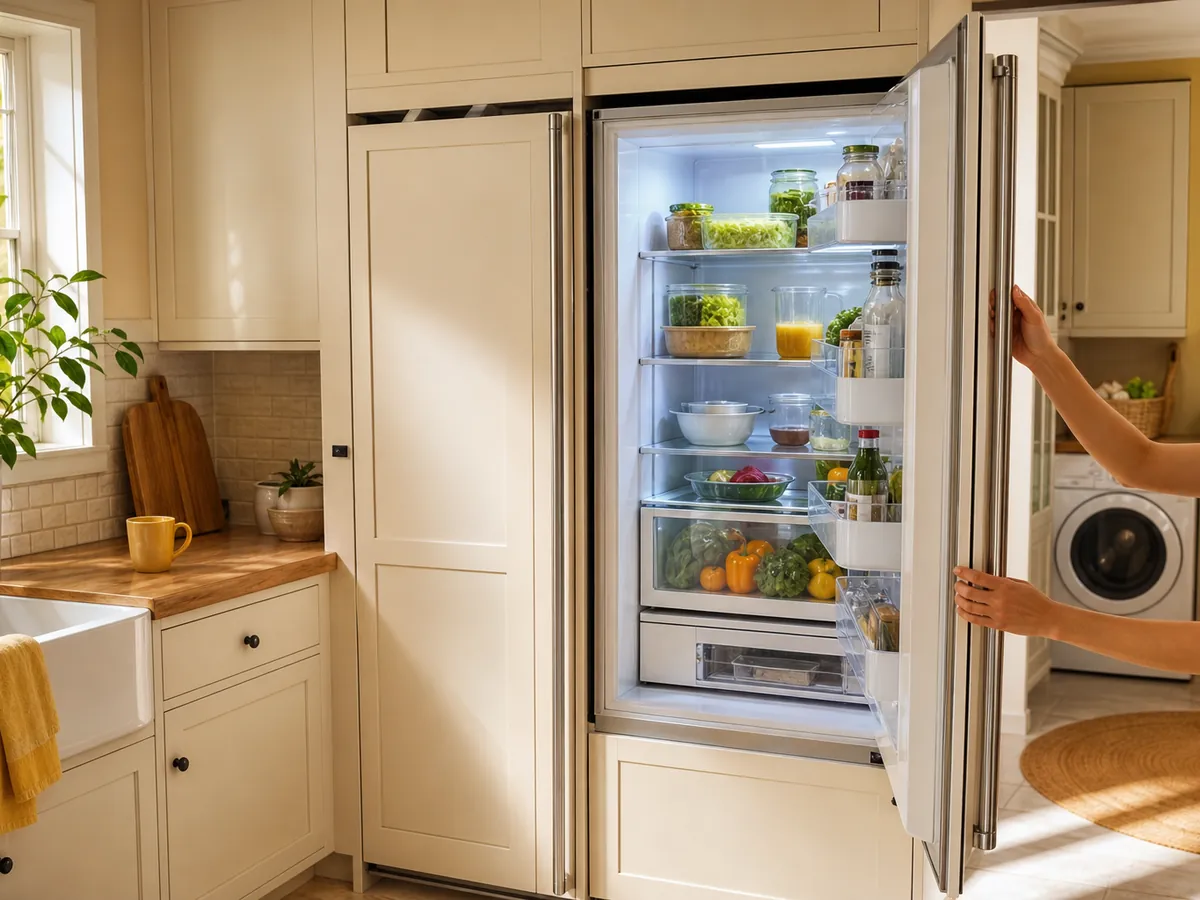
A Whirlpool refrigerator that warms up in a Tampa summer is most often fighting heat it cannot shed or air it cannot move. Dirty condenser coils, a door gasket that no longer seals, vents blocked by food and a wrong setting are the four things to check, and a thermometer tells you how serious it is.
How do I know how warm it really is?
Do not trust the feel of the food. Put a refrigerator thermometer in a glass of water on the middle shelf, close the door and read it after several hours. Food safety guidance from USDA is built around 40 degrees F, so a reading above that means food is at risk. Write down the reading and the time, because the number helps a technician as much as it helps you.
Check the freezer the same way. If the freezer is cold and the fresh-food side is warm, air is not getting across, which points to vents, a damper or a fan. If both are warm, look at the coils, the seals and the compressor.
Can dirty coils cause a warm refrigerator?
Yes. The condenser coils release the heat the refrigerator removes from the food. In a kitchen that is already hot, a layer of dust and cooking grease makes that job harder, and the compressor runs longer and hotter without ever catching up. On many Whirlpool models the coils sit behind a grille at the bottom front. On others they sit behind the lower back panel.
Switch off the breaker or unplug the refrigerator first. Then vacuum the grille and the visible coils with a brush attachment. Do not bend the fins or remove sealed lines. If the coils are behind a panel that needs tools, leave that to us.
Is the door seal letting warm air in?
Humid air leaking past a worn gasket brings moisture that frosts the evaporator and warms the cabinet. Close the door on a dollar bill at several points. If it pulls out with no drag, the seal is weak there. Look for tears, flat spots and a gasket that is dirty or stiff. Warm water and dish soap on a cloth often restores a sticky seal. A torn or hardened gasket needs replacing.
What about vents and settings?
Cold air from the freezer reaches the fresh-food side through small vents. A tall bottle or a bag of produce pushed against them stops the flow. Leave a gap and keep the shelves loosely packed. Also check that the control has not been bumped to a warmer setting, and that a recently installed filter or shelf has not blocked the air path.
Does a Florida summer change the way I should use the refrigerator?
It does. Hot, humid kitchens raise the load in three ways: the condenser has to reject heat into warm air, every door opening brings in moisture, and cooling a freshly loaded cabinet takes longer. Let hot leftovers cool on the counter for a short time before they go in, and avoid loading the shelves with warm groceries all at once. A cabinet that is packed solid blocks airflow, while one that is nearly empty loses cold quickly each time the door opens, so aim for a moderate load.
Placement matters too. A refrigerator next to a range, a dishwasher or a sunny window absorbs heat through its sides. If the unit sits in a tight alcove, check the guide for the clearance on top, back and sides.
What will a technician test that I cannot?
We measure the temperature in both sections, then check the evaporator fan, the condenser fan, the defrost heater and thermostat, the damper and the start relay with a meter. We also look at the evaporator for frost patterns, which show whether air or defrost is the problem. Sealed-system work follows EPA refrigerant rules, and you receive a written price before any part is ordered. That order of testing prevents replacing a fan when the real cause was a coil caked with grease.
Keep a simple log for a week: the thermometer reading morning and evening, whether the compressor is running, and what the weather is doing. A pattern, such as warm readings only in the afternoon, points to heat load, while steady warmth day and night points to a part that has failed. That log saves a technician real diagnostic time.
| What you notice | Likely cause | What you can check | When to call |
|---|---|---|---|
| Warm fridge, cold freezer | Blocked vent, stuck damper or fan | Clear the vents and look for frost | Still warm after a day |
| Both sections warm, compressor running hot | Dirty coils or poor airflow around the cabinet | Vacuum the grille with the power off | Coils are clean and it is still warm |
| Frost along the door edge | Gasket not sealing | Dollar bill test and cleaning | Gasket is torn or stiff |
| Warm and silent | No power or a failed control or compressor start part | Outlet and breaker | Power is fine and nothing runs |
Frequently asked questions
Should I turn the dial colder?
A colder setting alone does not fix a coil, seal or airflow problem and makes the compressor work harder. Find the cause first, then adjust the setting in small steps and wait a day between changes.
Is food safe after a warm spell?
Use the thermometer reading and how long it stayed above 40 degrees F. USDA guidance sets limits on that time, and food that spent too long above the line should be discarded. Appearance and smell are not reliable guides.
How far should the refrigerator sit from the wall?
Follow the clearances in your use-and-care guide. A few inches of space at the back and sides lets heat leave, and a unit pushed tight into cabinetry runs warmer in a Florida summer.
Can a warm refrigerator damage the compressor?
A compressor that runs for long periods in a hot kitchen wears faster. Fixing the cause of the heat load, such as dirty coils or a weak seal, helps it last.