Yearly Checklist for an Older Whirlpool Top-Load Washer
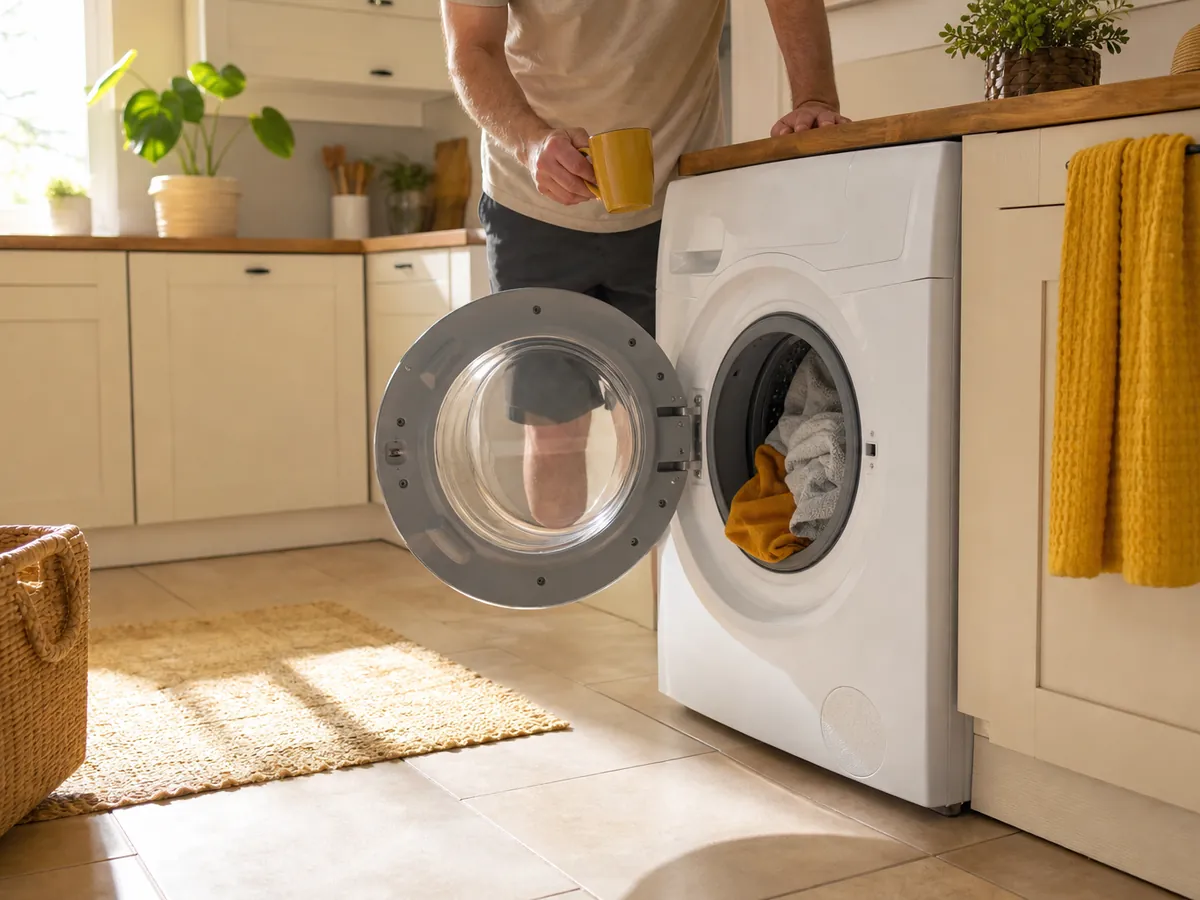
An older Whirlpool top-load washer in a Florida home does best with a yearly checklist: check the hoses and valves, level the cabinet, test the lid switch, clean the dispensers and run a tub-clean cycle. Doing it in one session each spring takes less than an hour and catches the leaks and odors that cost more later.
What do I check first, with the power off?
Unplug the washer and close the supply valves. Pull it forward a little and look at the hoses, the drain hose and the electrical cord. Replace any hose that is bulging or stiff. Make sure the drain hose is secured in the standpipe and sits at the height the guide gives. Check the floor around the washer for stains, soft spots or rust, since those are signs of an old leak.
Look under the lid and around the tub for rust or detergent crust, and wipe them clean.
How do I level the washer and test the lid switch?
Put a small level on top and adjust the feet until the washer sits level front to back and side to side. Then push on the corners to confirm that it does not rock. A washer that walks across the floor often needs only this adjustment. To test the lid switch, plug it in, start a spin and lift the lid. The drum should stop, and the machine should not spin again until the lid is closed. If it keeps spinning with the lid up, stop using it.
What should I clean and run?
Remove the dispensers for bleach and fabric softener and rinse them under warm water. Wipe the lid seal, the tub rim and the agitator or impeller. Run a tub-clean cycle or follow the guide’s method with a washer cleaner, and leave the lid open afterward to dry. Florida humidity helps odors grow, so regular cleaning matters more here than in a dry climate.
Use only the amount of detergent the guide gives. Extra suds feed residue and odor, and high-efficiency models need low-sudsing products.
What changes as the washer gets older?
Suspension rods, snubber pads and the drive belt or coupler wear with use. You may notice more banging, slower spin or clothes coming out wetter. The pump can start to hum, and the lid switch can become unreliable. These are the parts a technician tests when a washer begins to act up, and catching them early avoids a flooded laundry room.
What should I do about odors and residue?
A washer that smells musty has residue somewhere. Wipe the underside of the lid, the gasket around the opening, the agitator or impeller and the detergent dispensers with a damp cloth and mild soap. Use less detergent. Leave the lid open between loads. If the odor stays after a cleaning cycle, the tub may have buildup behind the drum that cleaning cycles do not reach, and a technician can check it.
Avoid heavy fabric softener use, which leaves a film that traps odor and clogs small passages.
How do I prepare for a long absence?
If you leave your Florida home for weeks, close both supply valves, unplug the washer and leave the lid open. Empty the dispensers. A washer left with water standing in its pump and hoses can grow bacteria, and a closed lid traps moisture. When you return, run a hot cleaning cycle before the first load and inspect the hoses for drips. A visit before the season starts can head off problems before you arrive.
Keep the owner’s guide and the model number in one place near the laundry area. When you call for service, the model and serial numbers let us look up the parts for your washer before we arrive, and a record of your yearly checks shows us how the machine has been treated. If you notice a new noise, a drip or a longer cycle during any check, jot it down with the date rather than relying on memory.
Finally, consider the whole room. A drain pan under the washer, a floor drain or a water sensor on the floor limits the damage if something does leak, and they cost little compared with a flooded laundry room.
| Task | How often | Who | Notes |
|---|---|---|---|
| Inspect hoses and valves | Every year | You, valves closed | Replace worn hoses |
| Level the washer | Every year | You | Check after moving |
| Test lid switch | Every year | You | Stop use if it fails |
| Run a tub-clean cycle | Per your guide | You | Leave the lid open |
| Suspension and pump checks | When noise or leaks appear | Technician | Do not open the base |
Keep a small note on the wall with the dates of your last checks, and add anything unusual you noticed.
Frequently asked questions
Should I leave the lid open between loads?
Yes, that lets the drum dry and reduces odors, especially in humid weather.
Why does my washer smell musty?
Detergent residue and damp air grow odors. Clean the dispensers, run a cleaning cycle and use less detergent.
Is it worth repairing an older washer?
It depends on the part and the age. A written price lets you compare repair and replacement.
Can I use a cleaner with bleach?
Follow your guide. Never mix bleach with other cleaners, since some combinations create hazardous fumes.