Replacing Rubber Inlet Hoses on an Older Whirlpool Washer
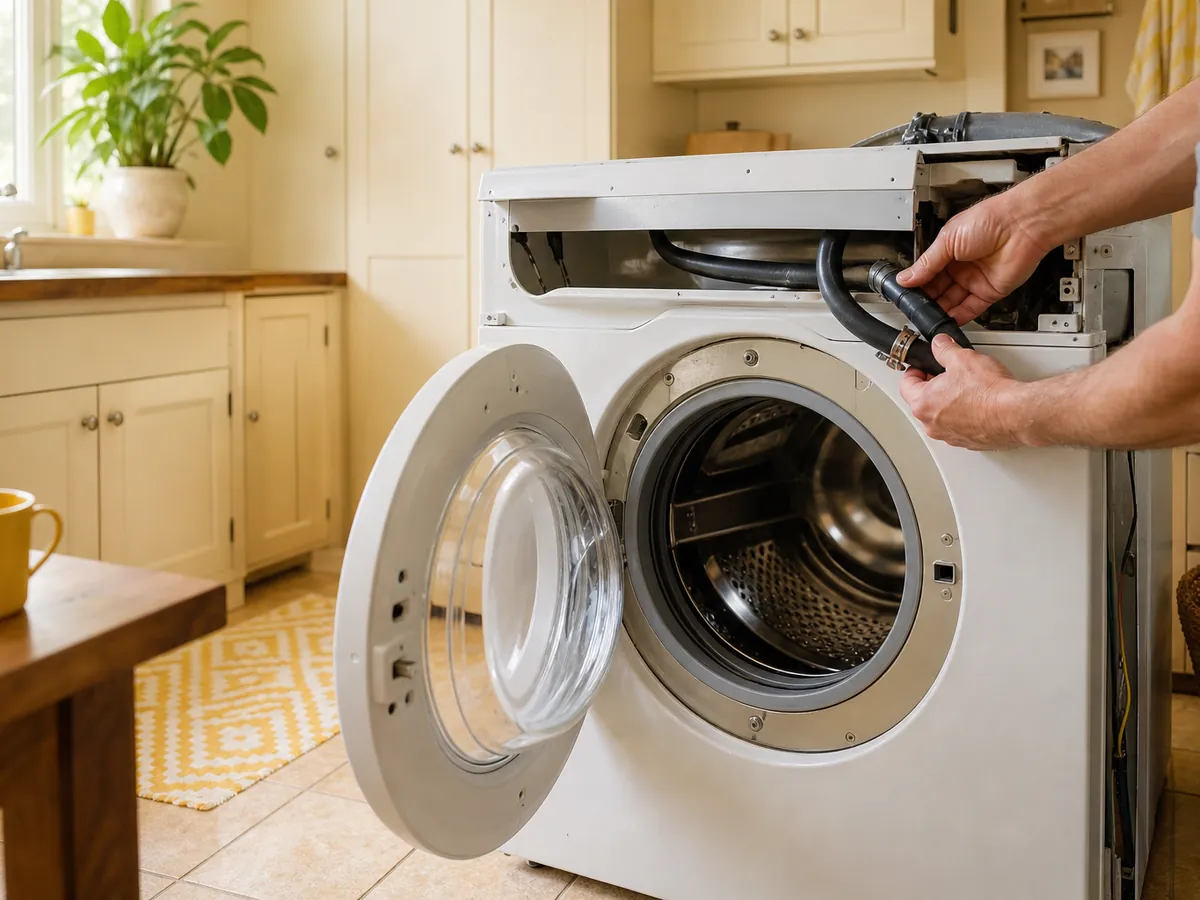
Rubber inlet hoses on an older Whirlpool washer stay under household water pressure whenever the supply valves are open, so a hose that is bulging, cracked or stiff should be replaced before it bursts. Inspect them once a year, switch off the supply valves when you go away, and swap in reinforced hoses with new washers if they show any wear.
Why do washer hoses fail?
A rubber hose ages from the inside and the outside. Pressure stretches it, heat and sunlight in a closet or garage dry it out, and minerals in the water attack the fittings. A hose that looks fine can have a weak spot just behind the coupling where it flexes. When it lets go, the washer’s valves keep feeding water into the room, and a burst can put a large amount of water on the floor in a short time.
In a Florida home, a washer in a garage or on a second floor adds risk, because the leak runs to a floor with a drain you did not plan on or into the unit below.
How do I inspect the hoses?
Turn off the washer, close both supply valves and unplug it if you must pull it out. Look at each hose along its full length. Bulges, blisters, cracks, rust-colored stains at the couplings and a hose that feels hard instead of flexible are all reasons to replace it. Check the fittings for white or green crust, which means slow seepage. Dry a paper towel and run it over each connection.
Look at the valves too. A valve that is stiff, corroded or does not close fully should be replaced by a plumber.
What should I buy to replace them?
Many owners choose braided stainless steel hoses, which resist bursting better than plain rubber. Match the length to the distance, leave a gentle curve and avoid kinks. Use new washers in the couplings, because old ones harden. Mark the hot and cold hoses so you connect them correctly. Hand-tighten and then add a small turn with pliers, not more, since over-tightening cracks the plastic fittings on the washer inlet valves.
What should I do after changing them?
Open the valves slowly and look for drips at each connection. Run a short cycle with the washer pulled out so you can see the back. Check again after an hour and again the next day. Then push the washer back carefully so you do not pinch a hose against the wall. Write the date on the box or on tape near the valves so you know when to look again.
What if a hose has already burst?
Close the supply valves, and if you cannot reach them, shut off the main water to the house. Switch off the breaker for the laundry area if water is near outlets, and avoid standing in water near electrical connections. Move belongings, pull up wet rugs and open the area to the air with fans after the water is stopped. Take photographs for your records, and speak to your insurer, since we cannot interpret a policy. Do not run the washer again until the hoses and the valves have been replaced and tested.
Water that soaks into drywall and flooring in a humid Florida home can grow mold within days, so drying fast matters.
Which valves and fittings should be replaced with the hoses?
If the shutoff valves are old gate-style valves with a stiff handle, a plumber can replace them with quarter-turn ball valves that close in a short turn. Always use new rubber washers at each coupling, and check that the washer inlet screens are clean. A screen packed with sediment slows the fill and strains the valve. We can inspect the inlet valves on the washer at the same visit and tell you what we find in writing.
Write the replacement date on the new hoses with a marker, and set a reminder in your phone. Hoses are easy to forget because they sit behind a machine you rarely move.
| Hose condition | What it means | What you can do | When to call |
|---|---|---|---|
| Bulge or blister | Weak wall, burst risk | Close the valves and replace | If you cannot close the valve |
| Cracks or stiffness | Aged rubber | Replace with reinforced hoses | If fittings are corroded |
| Crust or damp at a coupling | Slow seep | Replace the washer and tighten | If it drips after that |
| Valve will not shut | Worn valve | Shut the main water if needed | Plumber or technician |
If you have a second home, close the supply valves every time you leave. That one habit protects you better than any hose.
Frequently asked questions
How often should washer hoses be replaced?
Check them yearly and replace them when they show wear. Many owners replace them every few years as a precaution.
Are braided hoses completely safe?
They resist bursting better, but they still age and need inspection. Keep the valves off when you are away.
Can a technician replace them during a repair visit?
Yes, and we can test for leaks and check the valves at the same time.
Do front-load washers have the same issue?
Yes. Every washer has inlet hoses under pressure, and the advice is the same.