Sparks Inside a Whirlpool Microwave: Why You Should Stop Using It
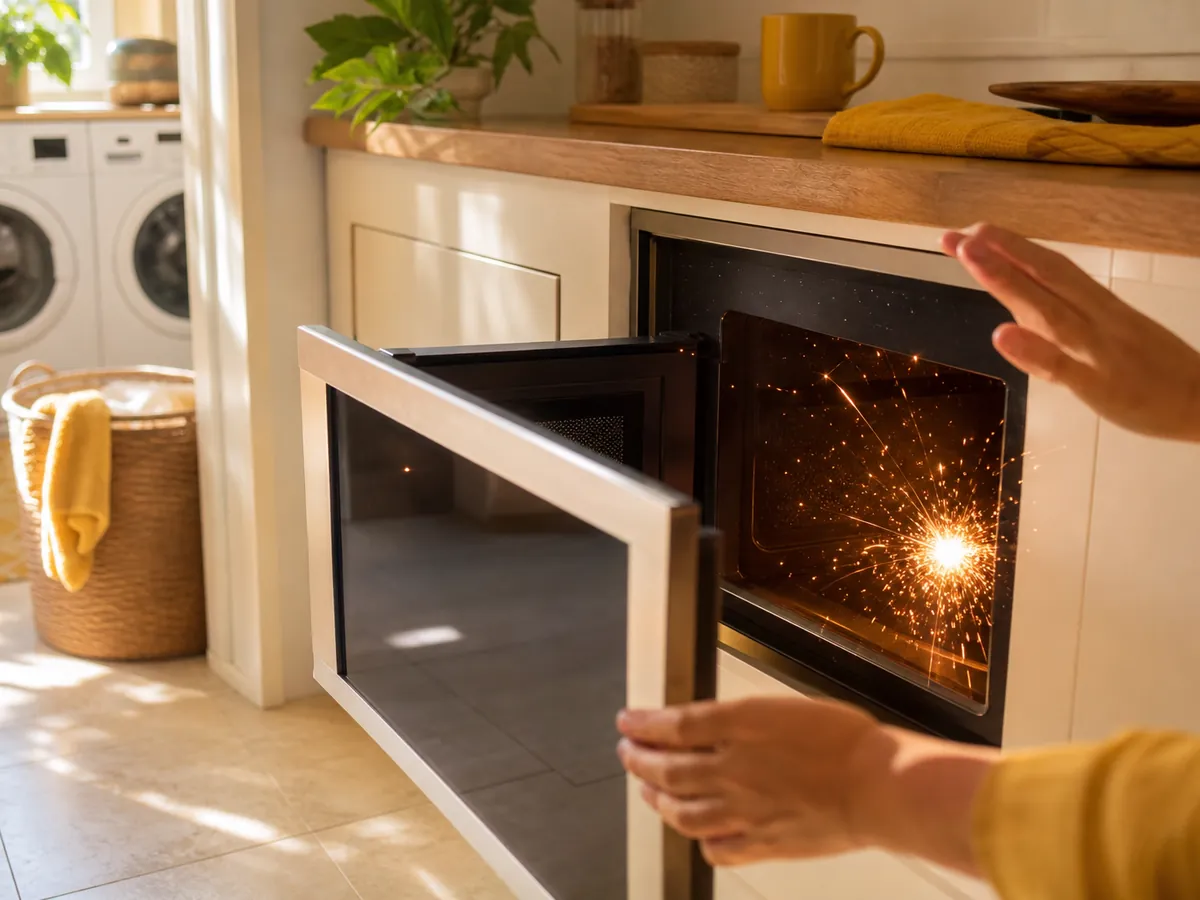
Sparks inside a Whirlpool microwave mean you should stop it, unplug it and not use it again until you know the cause. The cause might be a bit of metal that is easy to remove, but it can also be burned residue or damaged internal surfaces that can ignite and need a technician.
What should I do the moment I see sparks?
Press stop and open the door only if it is safe to do so. If you see flames, keep the door closed to starve them of air, unplug the unit if you can reach the plug safely and call 911. If there are no flames, unplug the microwave and let the cavity cool. Remove food and dishes carefully. Do not try the microwave again to see what happens.
Ventilate the kitchen by using the range hood fan and leave the room if there is smoke.
What metal can cause sparks?
Foil, a fork, a twist tie, a travel mug with a metal lining and a plate with a metallic rim can all arc. Cookware with gold or silver trim and some takeout containers with wire handles are frequent culprits. Look at what was inside. If you find metal, remove it and inspect the cavity for scorched areas before using the unit again.
Even a small metal fleck lodged in the door seal can create sparks, so wipe the door edges as well.
Could the microwave itself be damaged?
Yes. A small cover on the side wall or ceiling of the cavity, called the waveguide cover, protects the opening where the energy enters. Grease can burn onto it, leaving a black patch that sparks. If it is cracked, burned through or missing, that is a part to replace. Chipped paint on the cavity wall exposes bare metal, which can arc as well. A microwave with a burned waveguide cover should not be used until the cover is replaced.
When is it time to replace the microwave?
Repair makes sense for a waveguide cover or a cavity that can be touched up. A cavity with burned-through metal, a cracked door that does not seal or repeated arcing despite repairs points toward replacement. For an over-the-range model, we give you a written price so you can compare it with a new unit and the installation it would need.
How do I clean the cavity so sparks do not return?
With the microwave unplugged and cool, wipe the walls, ceiling and door seal with a damp cloth and mild soap. Heat a cup of water with a slice of lemon for a short time to loosen stuck food, then wipe it out. Avoid abrasive pads that scratch paint. Grease and sugar splatter near the waveguide cover are common sources of arcing, so check that area with a flashlight.
Cover food with a microwave-safe lid or paper towel to reduce splatter, and stir liquids so they do not boil over.
What will a technician check?
We unplug the unit, discharge the high-voltage parts and inspect the waveguide cover, the cavity paint and the stirrer area for burns. We check the door seal and latches as well, because poor contact can cause arcing at the door. Replacement of the cover is straightforward when the cavity is sound. If the cavity metal is damaged, we say so and quote both options in writing. Our labor carries a 30-day workmanship warranty.
Remember the broader rule for microwaves: never run one empty, never use containers not meant for it and never defeat the door switches. Teach everyone in the household to check what goes in. Families with children or older relatives benefit from a short note on the door that lists what is not allowed, because the most common cause of sparks is a rushed reheating of leftovers in the wrong dish.
If the sparks happened once, with a plate you know had a metal rim, and the cavity looks clean afterward, you may be fine. If they happened with nothing metal or keep returning, treat the microwave as unsafe until a technician has looked at the cavity and the waveguide cover.
| What you see | Likely cause | What you can check | When to call |
|---|---|---|---|
| Sparks with a metal-rim plate | Metal trim arcing | Check dishes, wipe the cavity | Scorch marks inside |
| Black patch on the cavity ceiling | Burned waveguide cover | Look with the unit unplugged | Before the next use |
| Sparks with nothing metal inside | Damaged cavity paint or cover | Look for bare metal | Right away |
| Flames or smoke | Ignition of residue or food | Keep the door closed, unplug, call 911 | After the emergency |
Frequently asked questions
Can I put foil in a microwave at all?
Follow your use-and-care guide. Many guides allow small, smooth pieces of foil in limited ways, but crumpled foil and anything near the walls can arc.
Is a microwave that sparked once still safe?
If you removed obvious metal and see no scorching, it may be fine. If you are unsure, have it checked.
Why do grapes spark?
Certain foods can create arcs because of their shape and moisture. Avoid such tricks, and follow guide advice.
Should I check for recalls?
If a microwave sparks or overheats without a reason, check the model on the CPSC recalls page.