Whirlpool Dryer Vent Runs: Foil Duct, Crushed Elbows, Roof Caps

A Whirlpool dryer vent that is foil duct, kinked at an elbow or capped by a blocked roof cap holds heat and lint inside the system, and that raises the risk of overheating and fire. Check the run once a year, replace foil duct with rigid metal where you can and clear the cap so air leaves freely.
Why does vent design matter so much?
A dryer moves a large volume of warm, moist air out of the house. Every bend, every foot of duct and every ridge in a flexible tube adds resistance. Lint catches on that resistance and builds up, which narrows the path further. When the exhaust cannot leave, the dryer overheats, drying slows down and the thermal fuse or the high-limit thermostat may trip.
Gas dryers add another reason. They also need a clear exhaust to carry combustion gases outdoors.
What is wrong with foil duct?
Flexible foil duct has ridges that catch lint, and it crushes easily when the dryer is pushed against the wall. It sags in attics and dips where lint pools. Rigid or semi-rigid metal duct has a smooth interior and holds its shape. Your installation guide states the allowed duct types, maximum length and number of bends, so read it. Plastic duct is a poor choice because it can burn.
How do I check the run?
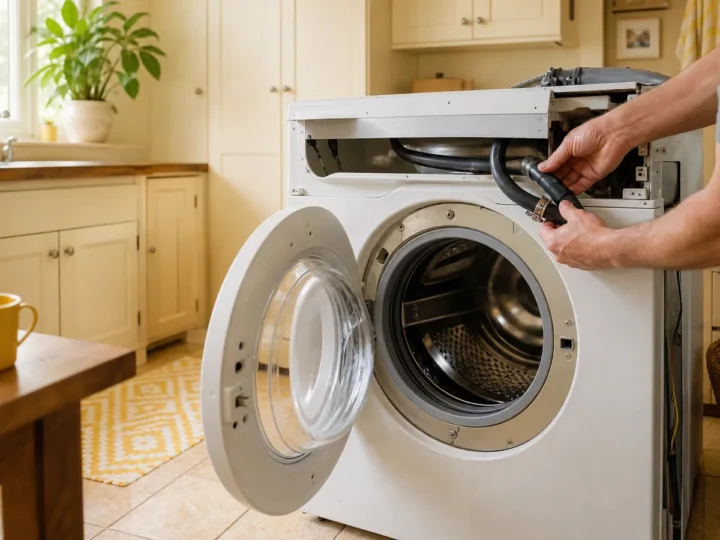
Unplug the dryer, and for a gas dryer close the gas valve before you move it. Pull the dryer forward and look at the connection at the back. Disconnect the duct and look for lint, crushing and loose joints. Reach in with a vent brush or a vacuum attachment suited for it. Then go outside and check the cap on the wall or the roof. The flap should open easily and close when the dryer is off. Remove bird nests, lint mats and debris. Run the dryer and feel the airflow at the cap.
Roof caps in Florida get blocked by leaves, nests and lint mixed with moisture, so look after storms.
When should I call a technician?
Call if the dryer is very hot to the touch, if clothes take far longer than before, if you smell burning or if the lint path is longer than the guide permits and you cannot shorten it. We test the airflow and the safety parts, and we can recommend changes to the run, with a written price before any work.
How does a Florida home change the vent picture?
Many Florida homes run the dryer vent through a roof, an attic or a long wall run, because of slab construction and condo layouts. Roof caps collect leaves, nests and lint mixed with moisture. Attic ducts sag and trap condensation, which turns lint into a mat. Condos and high-rises may have shared vent shafts with their own rules. Ask your building who is responsible for the shaft and when it is cleaned.
After a storm, check the outside cap, since wind can bend it and debris can block it.
How should a good vent be built?
The best runs are short and straight, with rigid metal duct, smooth joints sealed with foil tape rather than screws that protrude into the duct, and a cap with a flap that opens freely. Elbows should be gentle, and the duct should not be crushed behind the dryer. A recessed box on the wall lets the dryer sit closer without crushing the duct. We can tell you what your layout allows and give a written price for changes.
Seasonal owners should add the vent to the list of closing-up and opening-up tasks. Birds nest in capped vents while a house is empty, and the first load on your return can then push hot air into a blocked pipe. Check the cap before you run the dryer for the first time in the season, and keep a long brush in the laundry room so cleaning becomes routine.
A short run with a clear path is cheaper than any repair that follows a blocked vent.
| Problem | Why it matters | What you can check | When to call |
|---|---|---|---|
| Foil or plastic duct | Catches lint, crushes easily | Look behind the dryer | Replace with metal |
| Crushed elbow behind the dryer | Chokes airflow | Pull the dryer out and look | Cannot straighten it |
| Blocked roof or wall cap | Traps exhaust | Look and run the dryer | Cap is out of reach |
| Very long run | Too much resistance | Compare with the guide | Run cannot be shortened |
A dryer vent is one of the few parts of a house where regular cleaning is a fire-safety matter. Put it on the same schedule as your smoke alarm batteries.
Frequently asked questions
Is it safe to use a dryer with a clogged vent?
No. Stop using the dryer until the vent is cleared, because heat and lint build up.
Can I vent a dryer indoors?
Do not. It adds moisture and lint to the house. Vent outdoors as the guide says.
How do I know the airflow is good?
You should feel steady, strong air at the outside cap with the dryer running.
Does a short run really matter?
Yes. A short, straight run lets air leave with less lint buildup.