Water at the Base of a Whirlpool Water Heater: What to Do First
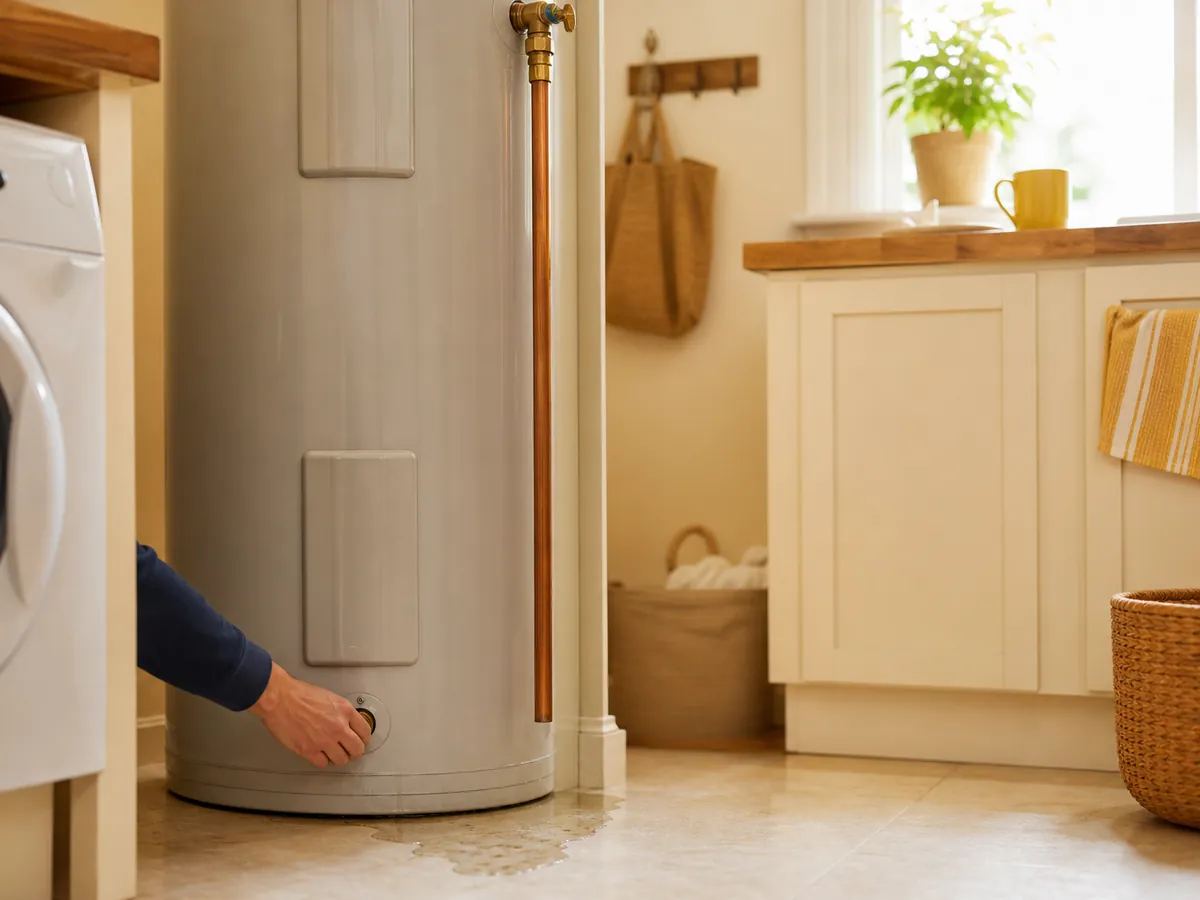
Water at the base of a Whirlpool water heater calls for three quick steps: turn off the power or gas, close the cold water supply to the tank and find where the water starts. A drip from a fitting or a valve can be repaired, but water seeping from the tank itself means the tank has failed and needs replacement.
What should I do in the first few minutes?
For an electric heater, switch off the breaker. For a gas heater, turn the gas control to off, or close the gas valve on the supply line. If you smell gas at any time, leave the home, do not use switches or phones inside and call the gas utility or 911 from outside. Close the cold water shutoff valve above the tank. Put towels or a shallow pan down and move belongings away from the water.
Where is the water coming from?
Dry the tank and the floor and watch. Look at the pipe connections at the top, since a loose or corroded fitting drips down the side. Look at the temperature and pressure relief valve and its discharge pipe. Check the drain valve near the bottom. If your heater has an expansion tank nearby, check that too. Water on the floor can also be condensation on a cold tank in humid weather or from an air conditioner drain line nearby.
What does a leaking relief valve mean?
The relief valve opens when temperature or pressure becomes too high. A steady drip may mean the valve is worn or that pressure in the system is above the valve’s setting. Do not cap or plug the valve, since it is a safety device. A technician or plumber can test the pressure, check the thermostat and replace the valve.
How do I tell a repairable leak from a tank failure?
A leak that begins at a fitting, a valve or a supply line is repairable. Water that seeps from the metal seam at the bottom, from the jacket or from beneath the insulation, usually from a corroded tank, means the tank is finished. Heating water in a leaking tank wastes energy and risks flooding, so turn the unit off and arrange for replacement. A tank can fail with little warning, which is why a pan and a drain line under the heater are worth having.
How can I limit the damage?
Dry the area quickly with fans, since a humid Florida home grows mold within a couple of days. Remove wet insulation or boxes. Take photos for your records and talk to your insurer if there was damage. We cannot say what a policy covers.
What will a technician check?
We confirm the source of the water, test the relief valve and measure supply pressure. We look at the fittings, the drain valve, the anode port and the expansion tank if there is one. For a gas heater we also check the venting and the burner area for water damage and rust. If the tank is leaking, we confirm it and explain what replacement involves, including the shutoffs, the venting and the drain pan. You receive a written price before work.
How can I prevent a surprise leak?
Look at the heater when you do other chores. Check for damp spots, rust streaks at the fittings and a puddle in the pan. Keep the area around it clear so you can see it. Flush the tank on the schedule in the guide. Know where the cold water shutoff is, and test that it closes. A water sensor on the floor beside the heater gives early warning, which is especially valuable in a seasonal home that sits empty for months.
Tanks in garages and closets collect dust, so wipe the top and the base now and then to see what is going on.
Keep the model and serial numbers, the installation date and the label with the capacity written down in a folder. When we arrive, those details let us bring the right parts and tell you whether the tank is still under any warranty, which is worth checking before you replace it.
| Where the water appears | Likely cause | What you can do | When to call |
|---|---|---|---|
| At a pipe fitting on top | Loose or corroded connection | Shut off water, dry and look | Fitting needs replacing |
| From the relief valve or its pipe | High pressure or temperature, worn valve | Do not plug it | Same day |
| From the drain valve | Worn valve or sediment | Check the cap and tighten gently | Valve keeps dripping |
| From beneath the jacket | Tank leak | Turn off power or gas and water | Right away |
Frequently asked questions
Can I keep using hot water with a small leak?
If the leak is from the tank, no. Switch off the heater and the water supply to the tank.
Is a wet floor an electrical risk?
Yes, for an electric heater. Switch off the breaker before going near standing water.
What is the drain pan for?
It collects leaks and carries them to a drain. Check that its line is clear.
Should I replace the heater in a flood?
Have the controls inspected before use, because wet gas valves and wiring are dangerous.