Whirlpool Ice Maker Water Lines: Aging Tubing and Slow Leaks
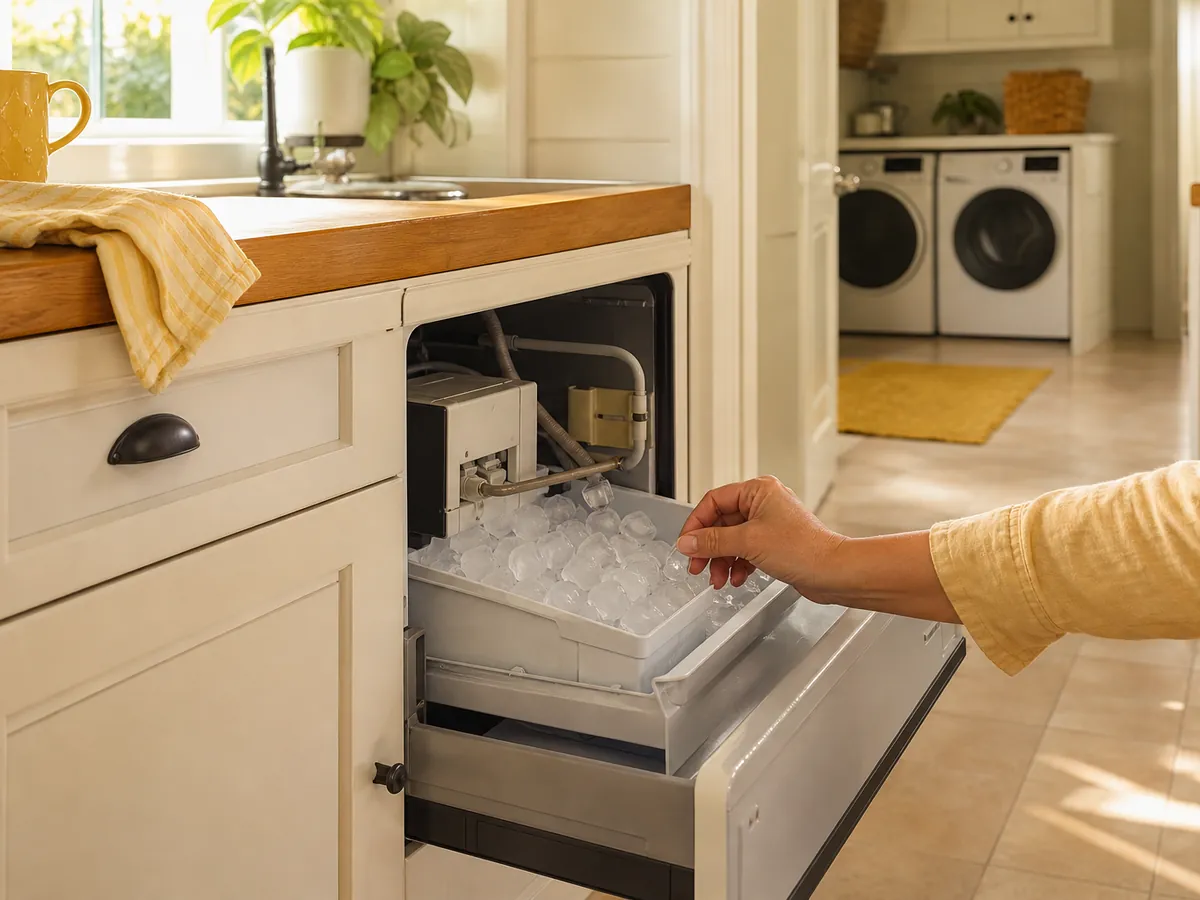
The water line that feeds a Whirlpool refrigerator ice maker can leak slowly for months before anyone notices, and the first sign is often a soft spot in the floor or a musty smell near the refrigerator. Checking the tubing, the shutoff and the fittings once a year is a quick way to avoid water damage.
Why do ice maker lines leak?
Most supply lines run from a shutoff valve in the wall or under the sink to the back of the refrigerator. Plastic tubing can stiffen with age, copper can kink when the refrigerator is pushed back, and compression fittings loosen with vibration. A saddle valve, an older style of tap on a pipe, is a known weak point because its small opening can clog or leak.
Because the line is under pressure all the time, even a tiny weep wets the floor around the clock. In a humid Florida home the moisture lingers.
How do I check for a slow leak?
Switch off the ice maker and unplug the refrigerator if you plan to pull it out. Slide it forward carefully, with help if needed, and look at the full length of the line. Feel the fittings with a dry paper towel. Look for stains, mineral crust, green corrosion, bulges or flattened bends.
Check the floor near the refrigerator and the cabinet underneath the sink or the wall behind it. A swollen baseboard or a discolored cabinet floor shows the leak has been going on for a while.
When should the line be replaced?
Replace the line if it is kinked, brittle, bulging or stained, if the fittings are corroded, or if it has been in place for many years. A braided or reinforced line with a proper shutoff valve is a better choice than a bare plastic tube. A technician can fit the right length and a clean shutoff and test for leaks.
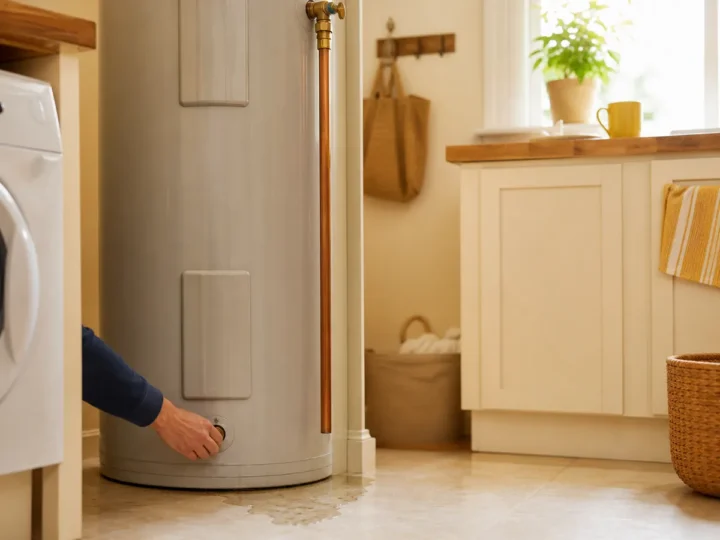
If you find water pooling, turn off the supply valve at the wall first, then dry the area and call us.
What else can cause water behind the refrigerator?
The inlet valve on the refrigerator, a cracked filter housing, a drain pan that overflows and a clogged defrost drain can also create puddles. Tracing the water to its source before replacing parts saves time and money.
What damage does a slow leak cause?
Water seeps into cabinet bases, flooring and drywall, and in a Florida home the damp stays and grows mildew. Laminate and wood floors swell and lift. Water that runs along a pipe can appear far from the source, in a neighbor’s unit in a condo or on a ceiling below. By the time a stain shows, the leak may have run for months. That is the reason a yearly look behind the refrigerator is worth the few minutes it takes.
Do not ignore a musty smell near the refrigerator or a floor that feels soft near the cabinet. Both are reasons to shut off the supply and look.
How do I move the refrigerator without making it worse?
Turn off the ice maker, shut the supply valve, unplug the refrigerator and have a helper. Pull it straight out slowly so the line does not stretch or kink, and leave enough slack when you push it back. Protect the floor with cardboard or a mat. Check that the line forms a gentle loop behind the cabinet and is not crushed against the wall. We can do this for you and test the line under pressure before we leave.
A water leak sensor placed on the floor behind the refrigerator is inexpensive and gives early warning through an alarm or a phone alert. It is no substitute for a sound supply line, but it catches the problem when a stain would not yet be visible, which is especially useful in a seasonal home. Test the sensor when you change its battery, and place a second one under the kitchen sink where the same supply passes.
| Part | Sign of trouble | What you can check | Action |
|---|---|---|---|
| Plastic or copper line | Kinks, brittleness, stains | Look along the full length | Replace the line |
| Compression fitting | Mineral crust, drips | Dry paper towel test | Technician tightens or replaces |
| Wall shutoff valve | Weeping at the stem | Open and close slowly | Technician or plumber |
| Inlet valve on the refrigerator | Water at the valve body | Check behind the lower panel | Technician |
Frequently asked questions
How often should the line be inspected?
Once a year is reasonable, and any time you move the refrigerator. Look at the floor and the wall for stains too.
Should I shut the water off when I travel?
For a long trip, yes. Close the shutoff valve and switch off the ice maker. A closed home gives a slow leak weeks to do damage unnoticed.
Can I replace the tubing myself?
A handy owner can, but a poor connection can leak at pressure. If you are unsure, have a technician do it and test the connection.
What kind of tubing is better than plain plastic?
Braided or reinforced lines with proper fittings handle pressure and movement better. A technician can fit the right length and test it for leaks.